How Machine Learning Research @ Penn supports student AI researchers
Machine Learning Research @ Penn prepares undergraduates for research by discussing academic papers in small groups, much like book clubs would dissect a novel
2 min. read
Last year, researchers published over 50,000 papers on machine learning—a nearly 50% jump from the previous year. “Figuring out what’s worth reading is hard,” says Alok Shah, president of Machine Learning Research @ Penn (MLR@Penn), a club that helps students stay on top of fast-moving developments in AI.
Reading academic papers, especially about cutting-edge research, can be a tricky endeavor. Every advance in AI builds on prior work, so understanding one paper might require diving into the citations to find (and then read) many more.
“Quickly judging a paper’s technical merit and broader impact? That’s not something I learned in class,” Shah says. “It’s a skill I’ve been trying to build—and honestly, I’m still working on it.”
Class of 2024 graduate Keshav Ramji founded the club in 2023, which quickly grew from a small core to dozens of students, majoring in everything from computer science to bioengineering.
One of the main ways MLR@Penn prepares undergraduates for research is by discussing academic papers in small groups, much like book clubs would dissect a novel. “By putting our heads together,” says club member Alexander Kyimpopkin, “we’re able to understand papers better and keep up with the state of the field.”
This notion of a “reading group” is commonplace in the lives of graduate students and industry researchers but is rarely accessible to undergraduates outside of on- or off-campus internships. “It’s an effective forum to talk about the latest cutting-edge research, like you would in industry or academia, but tailored for students with less experience,” says Ramji.
On the move: Water quality and antimicrobial resistance testing goes mobile
Penn researchers have developed a mobile field laboratory allowing them to test water quality and track antimicrobial resistance in and around San Cristóbal in the Galápagos.
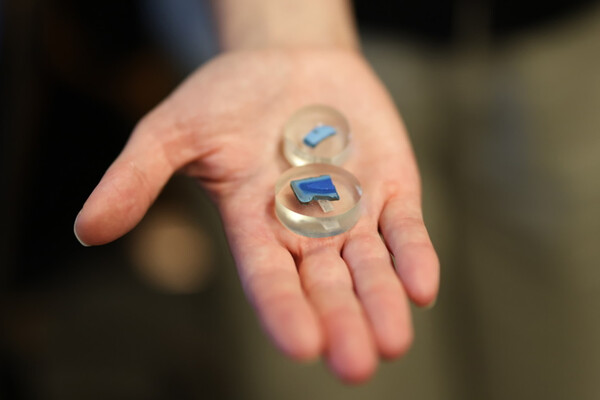
Penn researchers Vanessa and Alexis North are studying one of the largest collections of Egyptian blue objects ever found in the ancient Near East, shedding new light on how the world’s first synthetic pigment may have traveled far beyond Egypt.
A new role for dental providers? Rethinking where vaccines are given
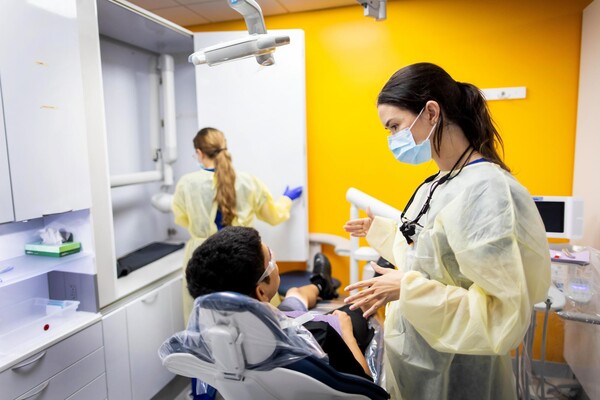
Vaccinations have traditionally been administered in primary care settings or pharmacies. However, for about a decade, some states have authorized dentists to administer vaccines, and many others did so during the COVID-19 pandemic. The effectiveness of this approach has led some countries and states to expand or consider expanding the role of dental providers in delivering routine vaccines, including those against COVID-19 and the human papillomavirus (HPV), and in providing vaccine education.
Penn student develops a way for computer chips to run more efficiently
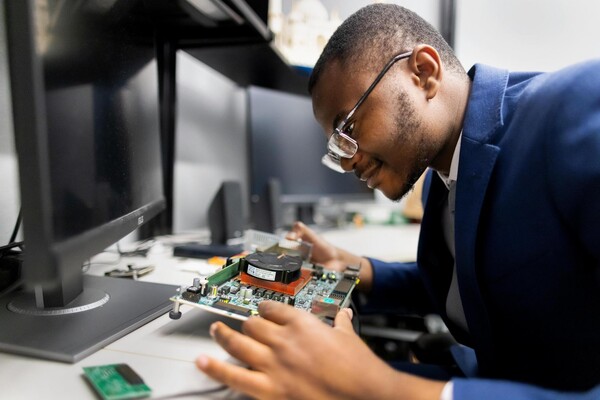
Fluid Silicon, a platform from President’s Sustainability Prize winner Nhlanhla Mavuso, allows computer chips to continuously monitor their health and self-tune as their characteristics change. The technology has the potential to reduce energy usage in data centers and improve reliability in mission-critical applications.