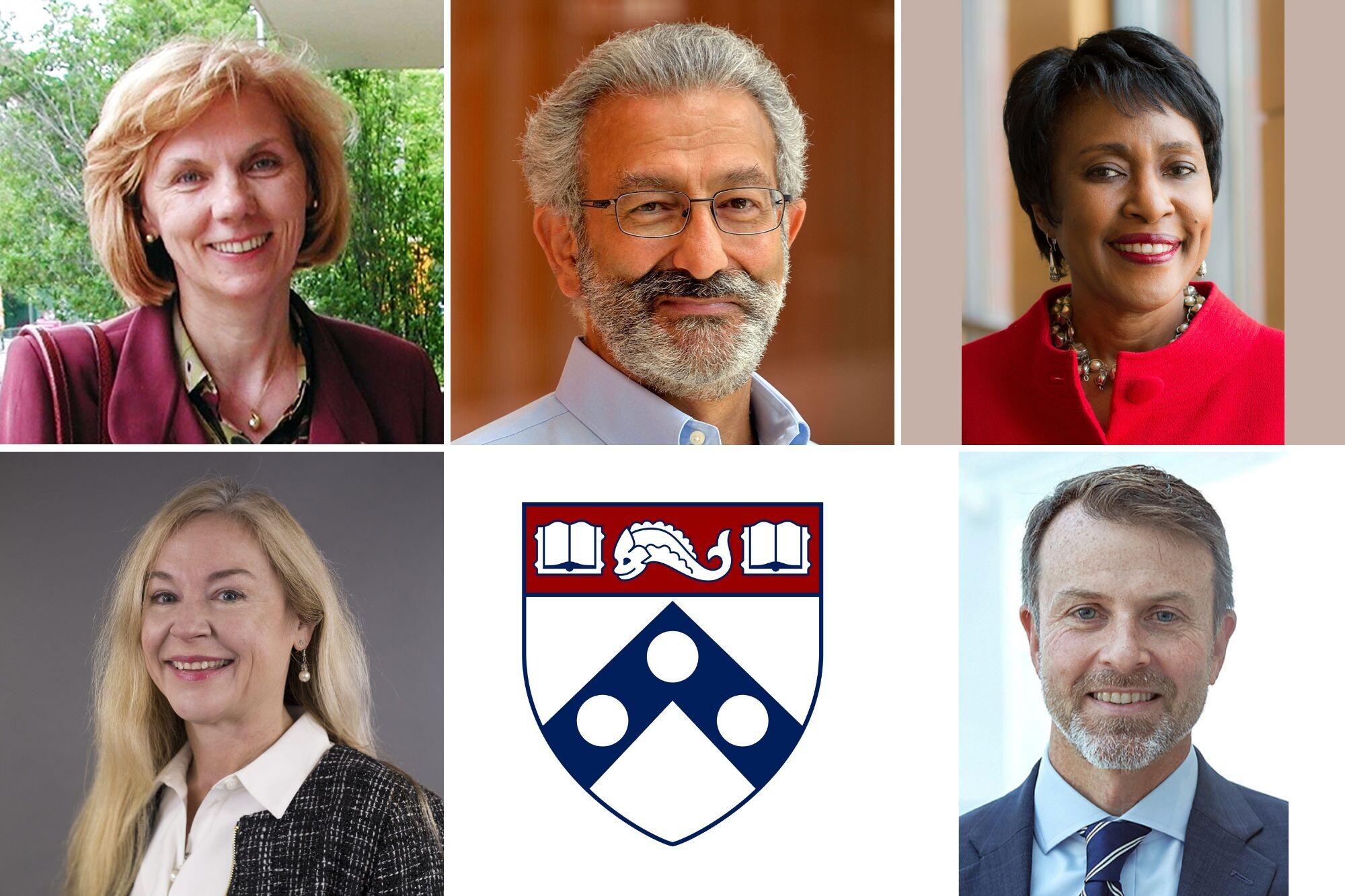
Five from Penn elected to the American Academy of Arts and Sciences in 2023
Faculty from the School of Arts & Sciences, School of Engineering and Applied Science, Graduate School of Education, and Perelman School of Medicine are recognized this year for contributions to physics, engineering and technology, education, economics, and microbiology and immunology.
The Academy of Arts and Sciences elected five Penn faculty this year, (left to right): (top) Mirjam Cvetič of the School of Arts & Sciences (SAS); Nader Engheta of the School of Engineering and Applied Science and SAS; and Vivian L. Gadsden of the Graduate School of Education and SAS; (bottom) Petra E. Todd of SAS, and E. John Wherry of the Perelman School of Medicine.
Mirjam Cvetič is the Fay R. and Eugene L. Langberg Professor of Physics and Mathematics in the School of Arts & Sciences. She is part of the high energy theory group at Penn, which studies the fundamental forces of nature, early universe cosmology and mathematical physics. Cvetič is an expert on issues relating to string theory and its consequences for particle physics. Her research spans broad thrusts in fundamental theory, ranging from gravitational physics and work at the interface with differential and algebraic geometry to leading efforts in constructions of string theory solutions and the study of their physics implications. She won the University of Maryland Physics Distinguished Alumni Award in 2007, and is a recipient of the Friedrich von Siemens Research Award of the Alexander von Humboldt Foundation in 2020.
Nader Engheta is the H. Nedwill Ramsey Professor, with affiliations in the departments of Electrical and Systems Engineering (primary appointment), Bioengineering (secondary appointment) and Materials Science and Engineering (secondary appointment) in the School of Engineering and Applied Science; and Physics and Astronomy (secondary appointment) in the School of Arts & Sciences. His current research activities span a broad range of areas including optics, photonics, metamaterials, electrodynamics, microwaves, nano-optics, graphene photonics, imaging and sensing inspired by eyes of animal species, microwave and optical antennas, and physics and engineering of fields and waves. He has received numerous awards for his research, including the 2023 Benjamin Franklin Medal in Electrical Engineering, the 2020 Isaac Newton Medal and Prize from the Institute of Physics (U.K.), the 2020 Max Born Award from OPTICA (formerly OSA), induction to the Canadian Academy of Engineering as an International Fellow (2019), U.S. National Academy of Inventors (2015), and the Ellis Island Medal of Honor from the Ellis Island Honors Society (2019).
Vivian L. Gadsden is the William T. Carter Professor of Child Development and professor of education in the Graduate School of Education; faculty member in Africana Studies and in Gender, Sexuality, and Women’s Studies in the School of Arts & Sciences; and faculty director of the Penn Child Research Center. Her research and interests focus on learning and literacies across the life-course and addresses issues of culture, equity, and access for young children and families in historically marginalized communities. Her collaborative research projects draw upon interdisciplinary frameworks that examine early childhood development, parenting, and families; father engagement in urban settings; social factors affecting health and education; children of incarcerated parents; and intergenerational learning. Gadsden serves or has served on numerous foundation boards, congressionally mandated committees, and White House initiatives. A past president of the American Educational Research Association, she has held leadership roles in the Society for Research in Child Development and editorship of several publications, including Educational Researcher and the Review of Research in Education.
Petra Todd is the Edmund J. and Louise W. Kahn Term Professor of Economics in the School of Arts & Sciences. She is also a research associate of Penn’s Population Studies Center. Her main fields of research are social program evaluation, labor economics, and microeconometrics. She is on the editorial board of the International Economic Review and the Econometrics Journal. She is a fellow of the Econometrics Society and of the Society of Labor Economists. She has published papers on econometric methods for evaluating the effects of program/policy interventions, the determinants of cognitive achievement, testing for discrimination in motor vehicle searches, sources of racial and gender labor market disparities, pension program design, and on conditional cash transfer programs. She is currently working on projects analyzing the effects of personality traits on gender labor market disparities, evaluating the effects of grade retention in Portugal, analyzing the effects of local minimum wage policies in the United States, and analyzing the effects of a nationwide preschool reform in Mexico.
E. John Wherry is the Barbara and Richard Schiffrin President’s Distinguished Professor and chair of the Department of Systems Pharmacology and Translational Therapeutics in the Perelman School of Medicine and director of the Penn Institute for Immunology. Wherry has received numerous honors including the Distinguished Alumni award from Thomas Jefferson University and the Cancer Research Institute’s Frederick W. Alt Award for New Discoveries in Immunology. Wherry helped pioneer the field of T cell exhaustion, the mechanisms by which T cell responses are attenuated during chronic infections and cancer. He helped identify the role of the “checkpoint” molecule PD-1 and others for reinvigoration of exhausted T cells in cancer. Wherry’s work has defined the underlying molecular and epigenetic mechanisms of exhausted T cells. In 2020-21, his laboratory focused on the immunology of COVID-19 and SARS-CoV-2 vaccination including establishing a new Immune Health Project to interrogate and use immune features to identify novel treatment opportunities.
On the move: Water quality and antimicrobial resistance testing goes mobile
Penn researchers have developed a mobile field laboratory allowing them to test water quality and track antimicrobial resistance in and around San Cristóbal in the Galápagos.
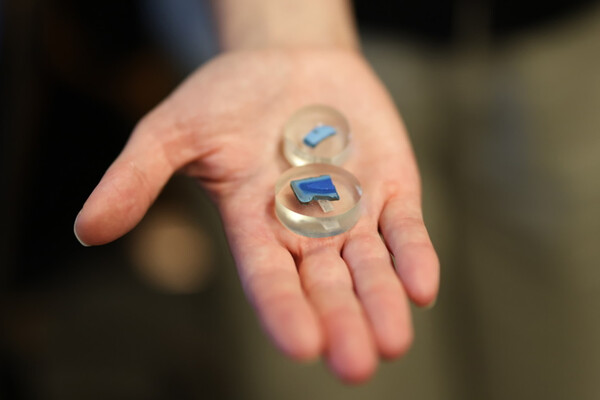
Penn researchers Vanessa and Alexis North are studying one of the largest collections of Egyptian blue objects ever found in the ancient Near East, shedding new light on how the world’s first synthetic pigment may have traveled far beyond Egypt.
A new role for dental providers? Rethinking where vaccines are given
Vaccinations have traditionally been administered in primary care settings or pharmacies. However, for about a decade, some states have authorized dentists to administer vaccines, and many others did so during the COVID-19 pandemic. The effectiveness of this approach has led some countries and states to expand or consider expanding the role of dental providers in delivering routine vaccines, including those against COVID-19 and the human papillomavirus (HPV), and in providing vaccine education.
Penn student develops a way for computer chips to run more efficiently
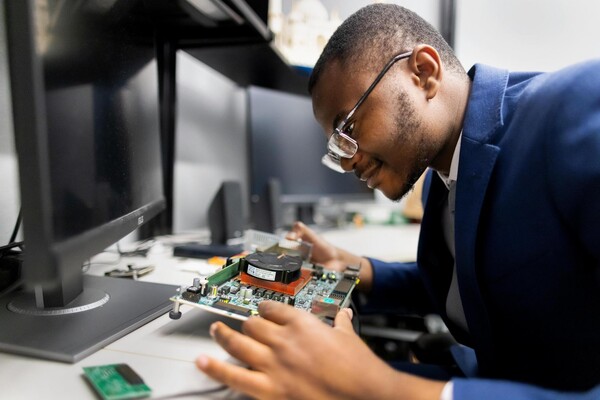
Fluid Silicon, a platform from President’s Sustainability Prize winner Nhlanhla Mavuso, allows computer chips to continuously monitor their health and self-tune as their characteristics change. The technology has the potential to reduce energy usage in data centers and improve reliability in mission-critical applications.