Empowering high school students through speech and debate
In an internship through the Netter Center for Community Partnerships, third-year Renee Liu developed a comprehensive afterschool speech and debate program that responded to needs identified by students and faculty in two West Philadelphia high schools.
3 min. read
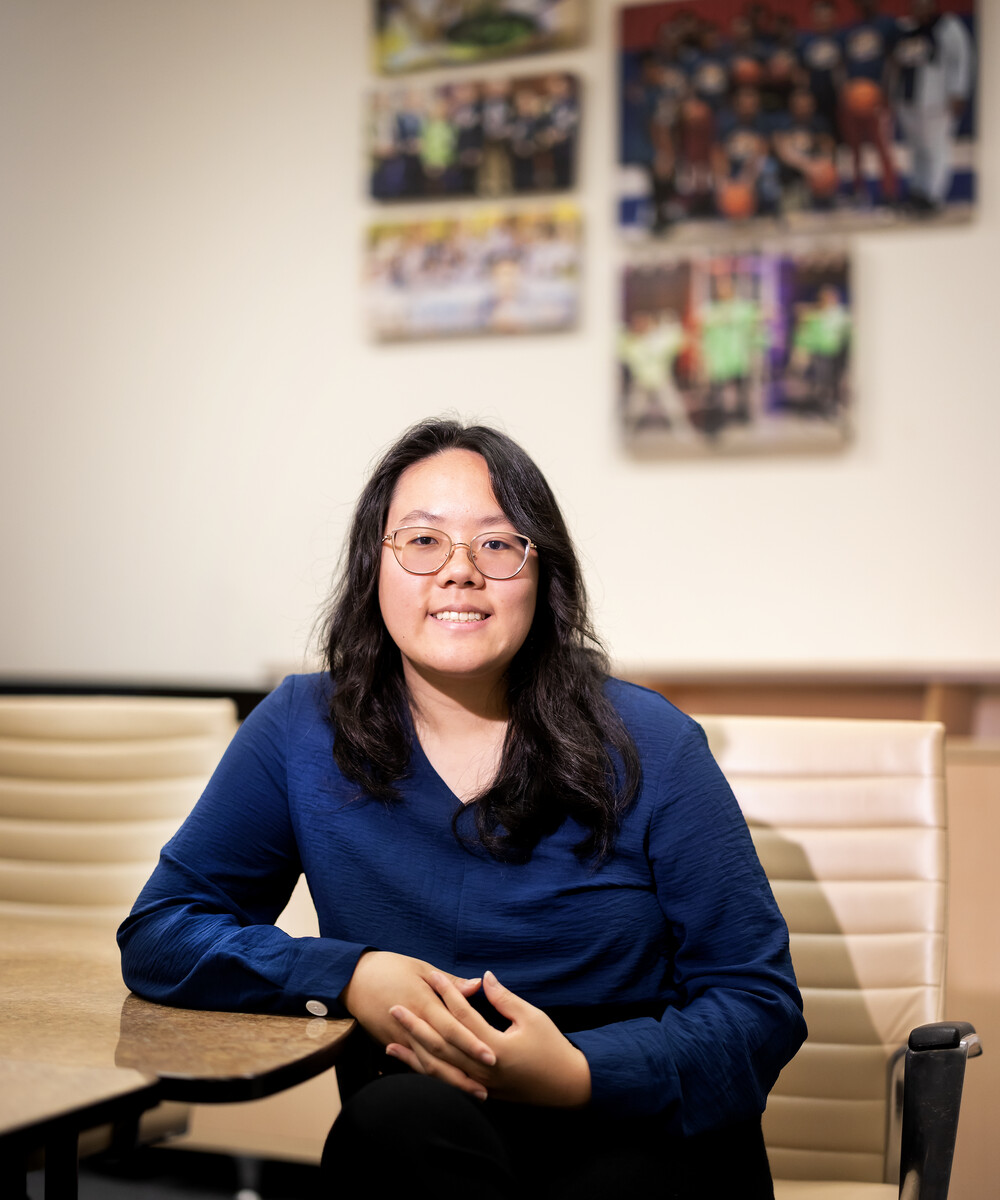
Speech and debate enriched Renee Liu’s personal and professional development. Now, she partners with two West Philadelphia high schools to bring tailored, long-term speech and debate programs to local students based on school-identified needs.
When she was in high school, third-year Renee Liu of the School of Engineering and Applied Science found purpose, confidence, and empowerment in a formative extracurricular activity: speech and debate.
“I wouldn’t be here today without speech and debate,” says Liu, noting the hobby that she began in third grade elevated her communication skills, prepared her for college and job searches, and “fundamentally changed” her self-concept.
Liu’s proposal originated with the culminating PPPS project in which interns design local, durable solutions that help respond to community-identified needs and strengthen mutually beneficial partnerships between Penn and West Philadelphia. The Voice Forge coaches students to participate in public speaking showcases, compete in speech and debate tournaments, and build essential communication skills. This past summer, Liu returned to PPPS as a teaching associate.
The abundant benefits of speech and debate
When developing The Voice Forge, Liu, a networked & social systems engineering major on a pre-medicine track, considered the value and benefits of speech and debate for high school students. She cites that schools with speech and debate programs tend to see increased testing scores and graduation rates, and that participants can improve literacy, critical thinking, research skills, and public speaking abilities.
“A lot of politicians have their roots in speech and debate—and so it’s been a clear indicator that it is a key component of leadership development,” says Liu, who was born in Allentown, Pennsylvania, and grew up in Lake Oswego, Oregon.
Through conversations with high school faculty and administrators, as well as Netter’s school-based staff, Liu found that many students are looking for low-pressure, engagement-based activities that can boost self-esteem, drive social interaction, and tap into their competitive spirit.
She recalls one Sayre staff member who shared that a lot of their students enjoy friendly arguments and competition. “I wanted to tap into the natural instinct of students to communicate and argue with each other” about topics that interest them, Liu says.
Liu focused on ensuring the after-school experience would feel accessible to students, avoiding excess structure and starting the program off by meeting once a week.
Prize funds enable program expansion
The Voice Forge received The Shah Family Prize for Innovative Undergraduate Student Projects at the Netter Center, enabling Liu to further develop and refine the program for long-term success. Recipients earn $5,000 to support project expenses. Liu is using the funds to provide students with professional attire for their attendance at National Speech & Debate Association competitions, as well as snacks to encourage consistent participation.
At Sayre, Liu aims to scale The Voice Forge to a twice weekly schedule by leveraging the school’s stipend initiative, which incentivizes students to participate in after-school extracurricular activities twice per week.
Uplifting the next generation of advocates
Liu says mentoring the next PPPS intern cohort over the summer was rewarding and meaningful. She helped interns think of project ideas, draft their proposals, and connect with local stakeholders. “It’s really nice to feel like I’m a part of [collaborating with] the community through them,” Liu says.
Liu is on track to graduate a year early, in May 2027, and plans to pursue a master’s in bioengineering at Penn while working full-time as either a clinical research coordinator or medical assistant. Eventually, she wants to earn an M.D.-Ph.D. in health policy. Liu seeks to use her interactions with patients to fuel her research and for her findings to directly benefit patients. She credits Netter’s emphasis on relationship-building and mutually beneficial partnerships with preparing her to be a more civically engaged citizen. “I really understood through PPPS that I want a person-facing career,” Liu says.
Liu recalls a moment while recruiting participants in the schools through an interactive table called the “Hot Take Lab,” where she invited students to pitch their perspectives on a topic of their choice. One student approached her and seemed nervous at first, describing herself as not good at public speaking. “I encouraged her anyway,” Liu says.
“She was very passionate about her topic, and she spoke very, very well—and I told her so afterwards,” says Liu, noting the student’s gradual but noticeable shift from reserved to confident. “That embodies what I hope my students feel.”
On the move: Water quality and antimicrobial resistance testing goes mobile
Penn researchers have developed a mobile field laboratory allowing them to test water quality and track antimicrobial resistance in and around San Cristóbal in the Galápagos.
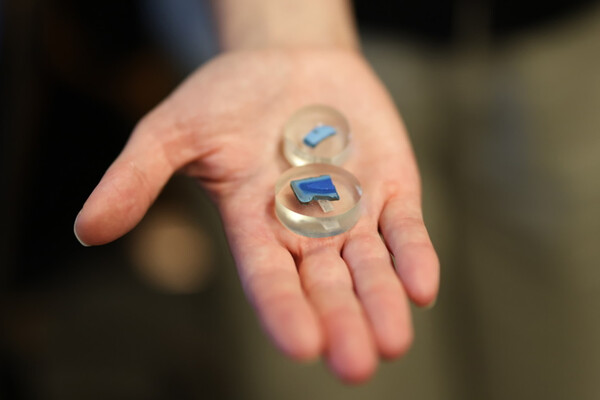
Penn researchers Vanessa and Alexis North are studying one of the largest collections of Egyptian blue objects ever found in the ancient Near East, shedding new light on how the world’s first synthetic pigment may have traveled far beyond Egypt.
A new role for dental providers? Rethinking where vaccines are given
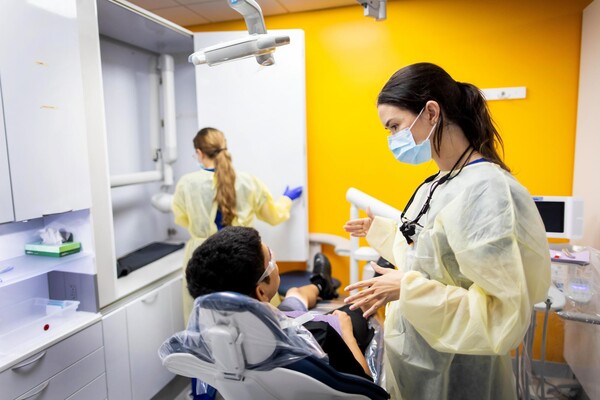
Vaccinations have traditionally been administered in primary care settings or pharmacies. However, for about a decade, some states have authorized dentists to administer vaccines, and many others did so during the COVID-19 pandemic. The effectiveness of this approach has led some countries and states to expand or consider expanding the role of dental providers in delivering routine vaccines, including those against COVID-19 and the human papillomavirus (HPV), and in providing vaccine education.
Penn student develops a way for computer chips to run more efficiently
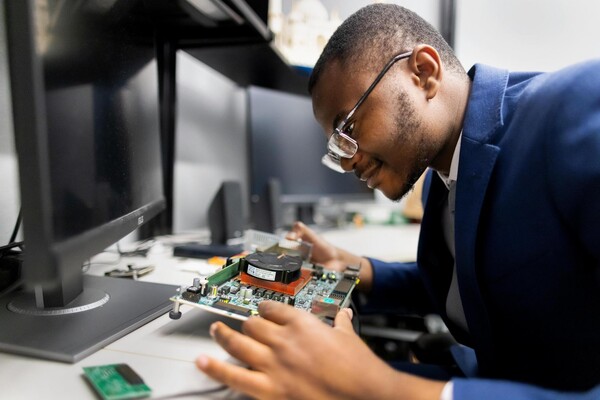
Fluid Silicon, a platform from President’s Sustainability Prize winner Nhlanhla Mavuso, allows computer chips to continuously monitor their health and self-tune as their characteristics change. The technology has the potential to reduce energy usage in data centers and improve reliability in mission-critical applications.