At the edge of empires, Lauder students embark on odyssey through Georgia
As part of the Lauder Institute’s Lauder Intercultural Ventures program, graduate students traveled to Georgia, to the Russian border, and beyond, learning about wine, language, historical reckonings, and more.
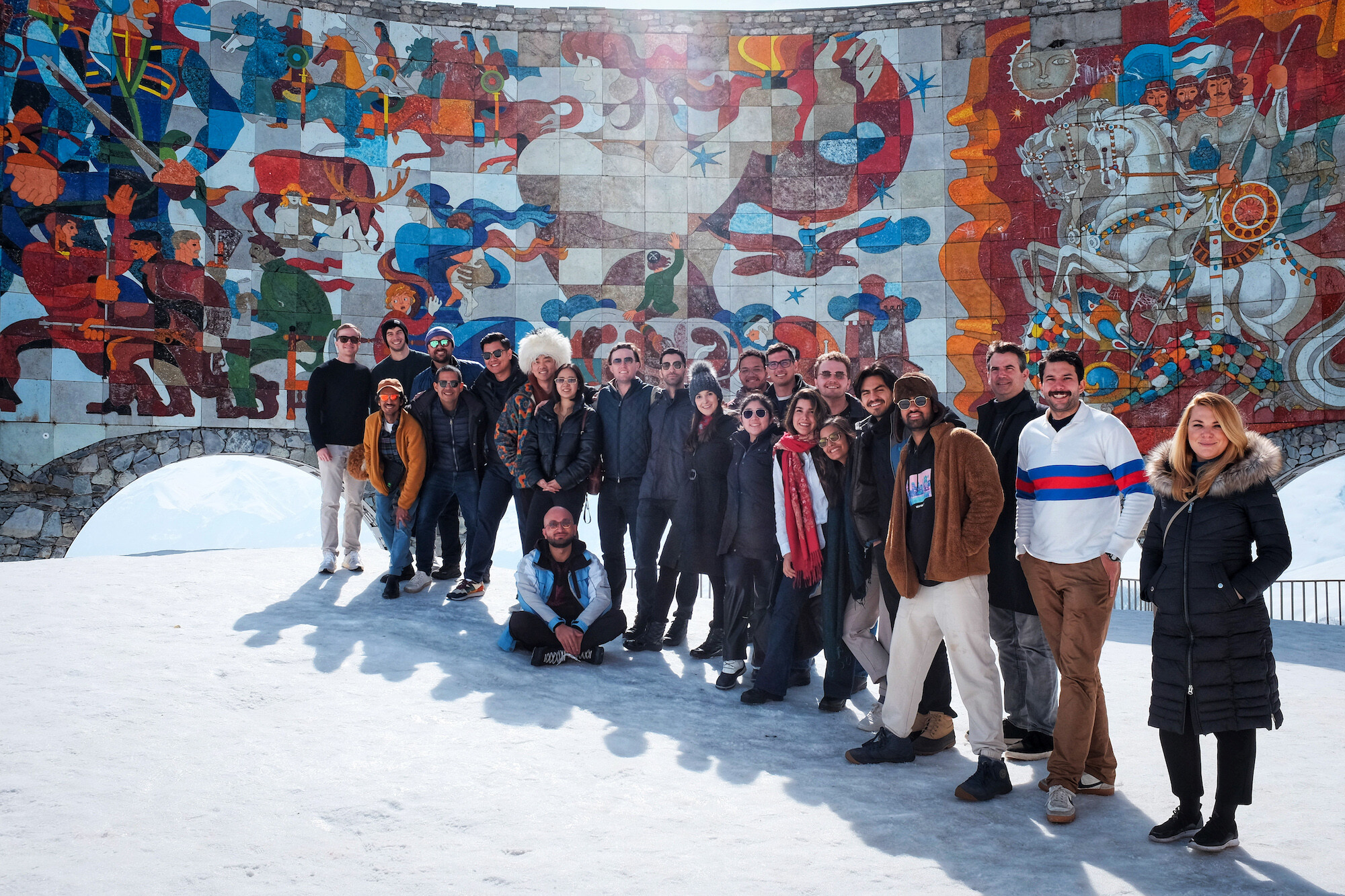
Attendees of the Lauder Institute’s LIV trip to Georgia pose in front of the Russian Georgian Friendship Monument, erected by the Soviet Union in 1983 in northern Georgia.
(Image: The Lauder Institute)
Growing up, Joselyn Salazar spent three years living in Azerbaijan, a small country bordered by the Caucasus Mountains and the Caspian Sea, neighboring both Russia and Georgia. Despite being just next door, Salazar had never been to Georgia: she lived there during the Russian-Georgian conflict in 2008, making it a high-risk visit.
So, when the opportunity arrived to finally visit Georgia as part of the Lauder Institute’s Intercultural Ventures (LIV) Program, it was kismet.
“I was excited to consider it, so many years later,” she says.
Salazar is a first-year student in the Lauder Institute’s Europe program (French language track); prior to that, she graduated from the School of Arts & Sciences, majoring in mathematical economics and French. After thoroughly exploring several options—including doing legwork to become a lawyer or apply for an economics Ph.D.—she was recommended to the Lauder Institute, a dual-degree program that combines a master’s degree in international studies with the Wharton M.B.A., as a snug fit.
It was.
Her family moved to several countries during her upbringing, and as such she was exposed to many languages, speaking Spanish at home, English for school instruction, and French in high school language instruction—while dabbling in Russian during her undergraduate years. Through her experiences with Lauder, she currently hopes to explore a career in sustainability and green banking solutions.
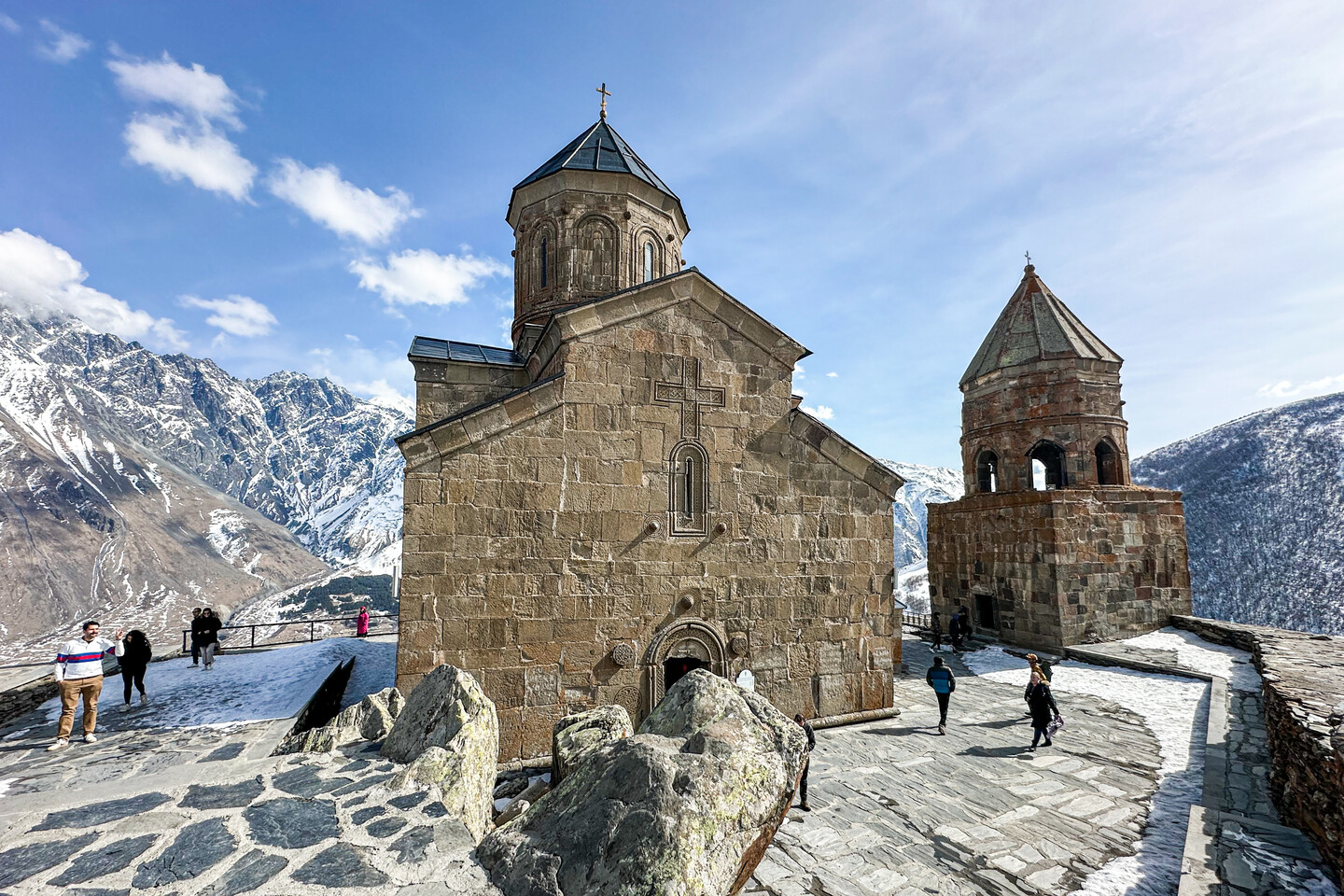
Gergeti Trinity Church, a 14th-century church in Kazbegi near the Russian-Georgian border.
(Image: Ignacia Leiva)
The trip to Georgia, led by Mitchell Orenstein of the Department of Russian and East European Studies with an “Edge of Empires” theme, is Salazar’s first of two Lauder Intercultural Ventures (LIVs), which are week-long trips that take place during the spring and fall semesters, and combine academic and experiential learning activities while offering firsthand insight into a country’s politics, economics, and cultural context.
“These academically oriented immersive encounters help participants understand how countries function and approach complex societal issues in different ways,” explains Mili Lozada Cerna, faculty director of Language and Culture Programs. “During the Georgia LIV, Lauder students learned how the geopolitical situation in the region, including the Russia-Ukraine War and China’s economic interests, directly impacts the daily lives of Georgia’s ethnically diverse population. This enriching opportunity can help them, as future leaders, to connect, understand, and address regional challenges.”
The trip to Georgia took place March 1-10, spanning Tbilisi, Telavi, Kazbegi, and Gori, with much of the trip spent in Tbilisi, Georgia’s capital city. The approximately two dozen students who attended the trip met with refugees from Chechnya, toured Gergeti Trinity Church with a brief visit to the Russian border, and saw a settlement village for internally displaced persons after visiting The Stalin Museum.
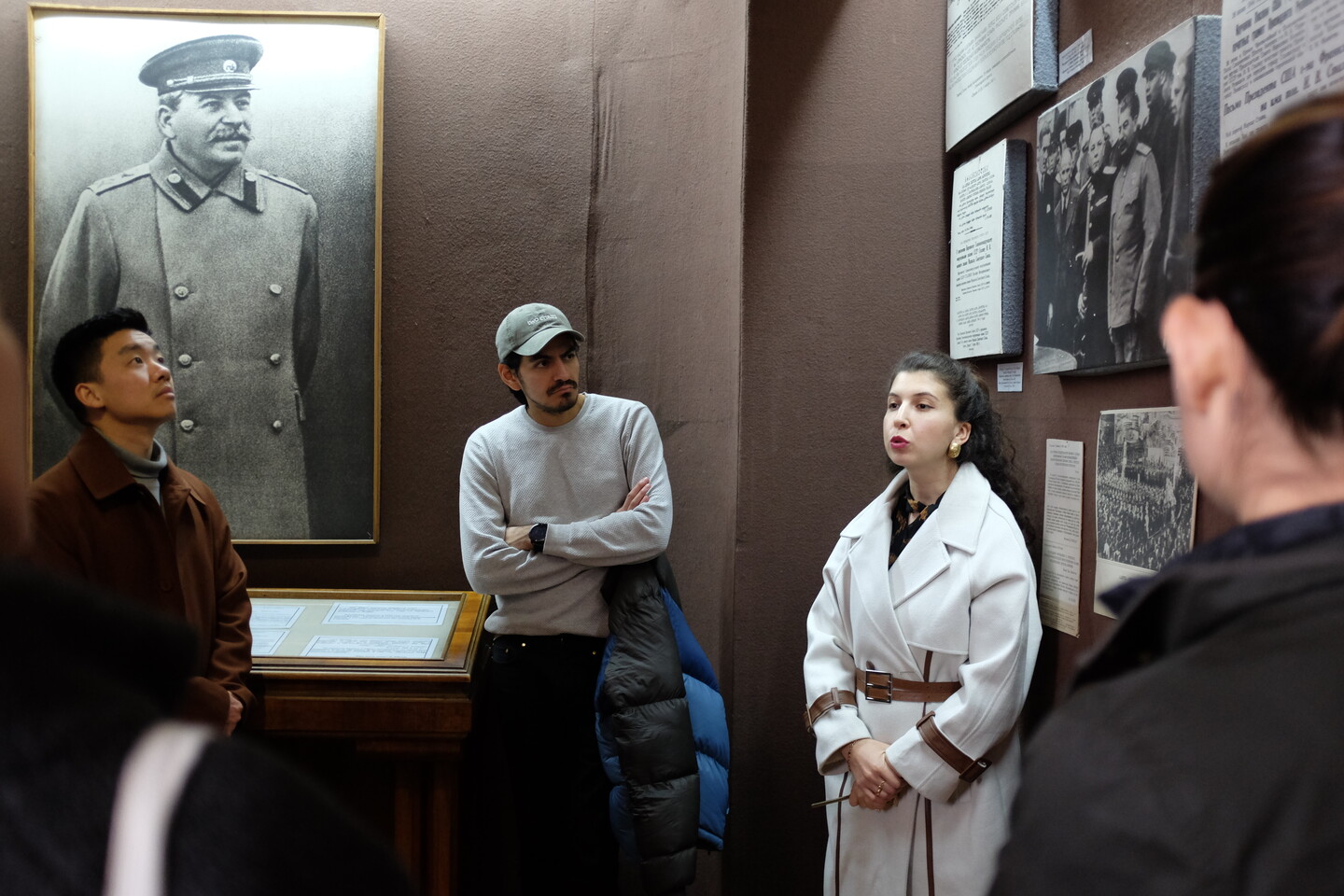
Lauder students and a tour guide at the Stalin Museum; Joseph Stalin was born in Georgia. Students were led on an official tour of the museum, followed by a privately conducted one to learn about what was overlooked or falsified.
(Image: Lauren Treutler)
“Georgia is such a unique place,” explains Orenstein. “And unusual in a lot of ways. The Caucasus Mountains being one of them; the geography is extraordinary, with dozens of languages spoken in that area of the world with many language groups. It’s exceptional, and the feature of Georgia being between different civilizations makes its politics really complicated.”
Orenstein says one takeaway from the trip, from conversations with people in the places they visited, was how disconnected the views of the elected government are from those of Georgian citizens. Many people were hesitant to speak Russian, he says, partly to protest what is considered a pro-Russian government that has refused to participate in sanctions against Russia.
“It’s one of the weirdest situations I’ve ever seen in my life of a democratically elected government that is so counter-thetical to what the population seems to want,” he says. “It’s unusual, I think.”
Politically, he says, Georgia is relevant to the analysis of his 2019 book “The Lands in Between” in that the government is among a host of countries in the region who “try to get their bread buttered on both sides,” attempting to receive support from both Russia and the European Union, while also leveraging its strategic trade route positioning to be a strong partner with China. The latter strategy, he says, is one that’s meant to keep Russia in check.
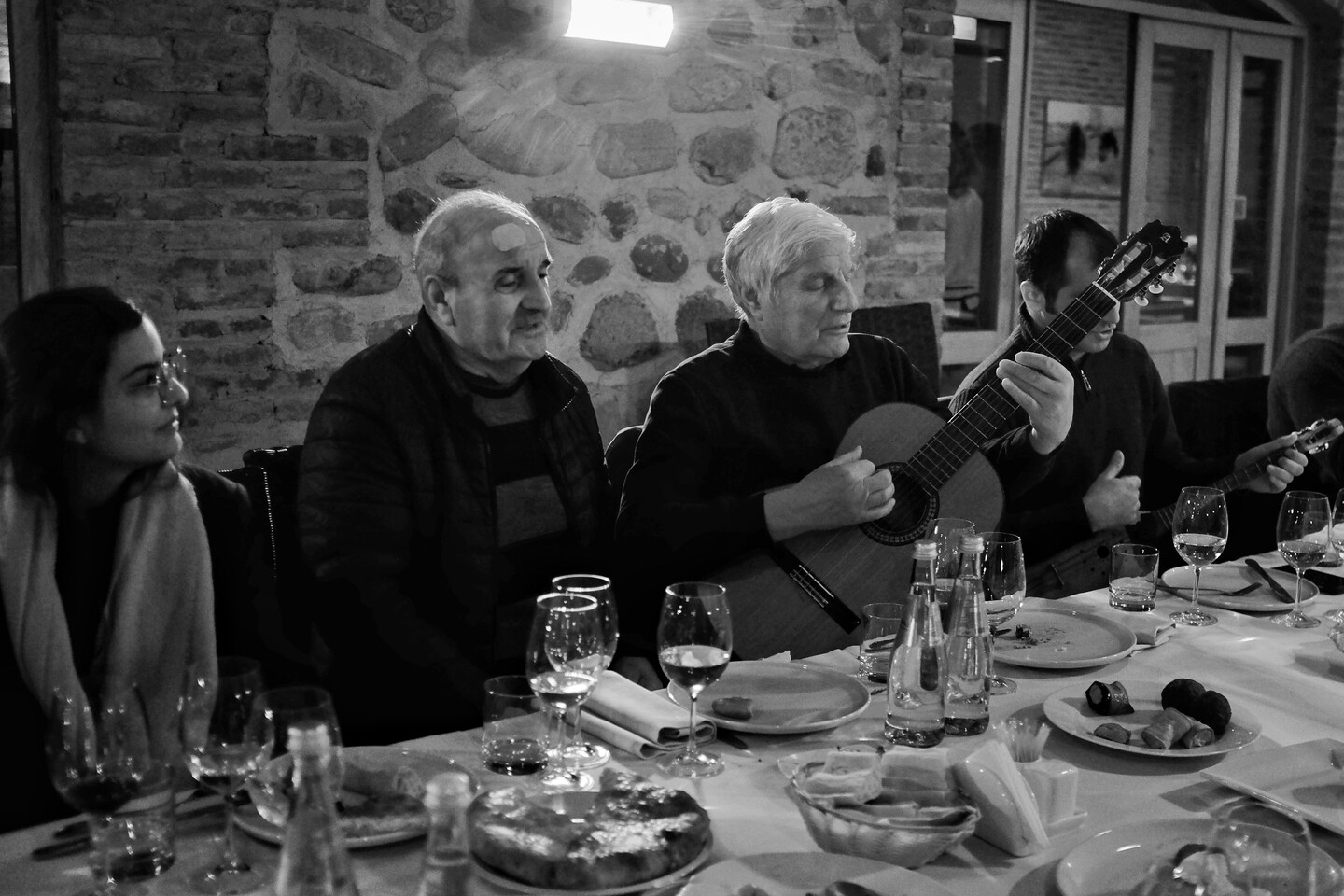
Outside of politics, Lauder students also learned about Georgian culture, participating in a welcome dinner that featured a traditional toast-making experience in which a community leader delivers long, honorific toasts during the meal, followed by Georgian folk music.
AGeorgian toastmaster plays folk music during a group dinner during the trip's first night. Conducting lengthy and honorific toasts is a unique feature of Georgian dining culture.
(Image: Lauren Treutler)
“I think that was a very unique way to understand the culture, what’s important to them, and that’s something that came up with people throughout the entire immersion: the importance of family, tradition, culture, and heritage,” notes Salazar.
She says she observed that being at the so-called edge of empires, ranging from the Ottomans to the Persians, gave Georgians a sense of pride in preserving their own traditions over time.
By the end of the trip, Orenstein adds that many students were optimistic about Georgia’s economic potential, despite geopolitical tensions. And as Penn faculty, it was a chance for him to explore up-close one of many former Soviet republics he studies in his research, while offering students a chance to experience an “extraordinary opportunity.”
“I told the students that basically my objective in this trip would be for it to be a life-changing experience for them,” Orenstein says, “which sounds inflated, a little bit. But I think that would be a good descriptor for education in general. It’s really about changing people’s lives.”
On the move: Water quality and antimicrobial resistance testing goes mobile
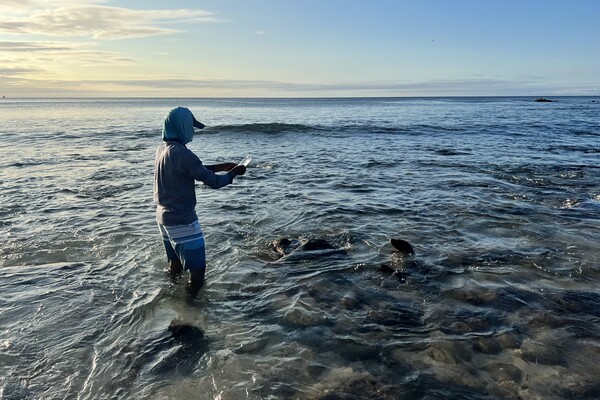
Penn researchers have developed a mobile field laboratory allowing them to test water quality and track antimicrobial resistance in and around San Cristóbal in the Galápagos.
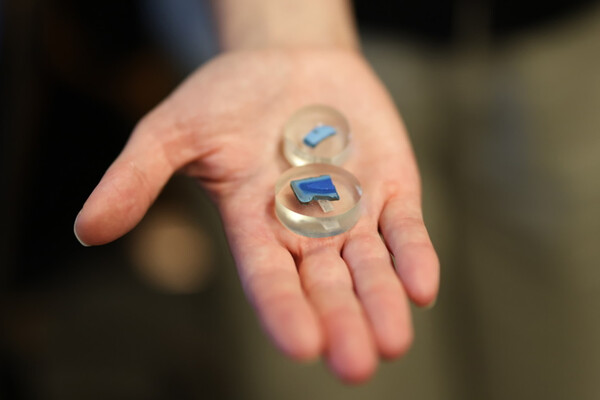
Penn researchers Vanessa and Alexis North are studying one of the largest collections of Egyptian blue objects ever found in the ancient Near East, shedding new light on how the world’s first synthetic pigment may have traveled far beyond Egypt.
A new role for dental providers? Rethinking where vaccines are given
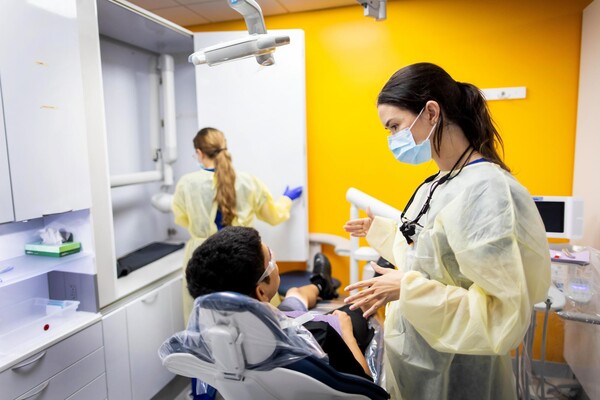
Vaccinations have traditionally been administered in primary care settings or pharmacies. However, for about a decade, some states have authorized dentists to administer vaccines, and many others did so during the COVID-19 pandemic. The effectiveness of this approach has led some countries and states to expand or consider expanding the role of dental providers in delivering routine vaccines, including those against COVID-19 and the human papillomavirus (HPV), and in providing vaccine education.
Penn student develops a way for computer chips to run more efficiently
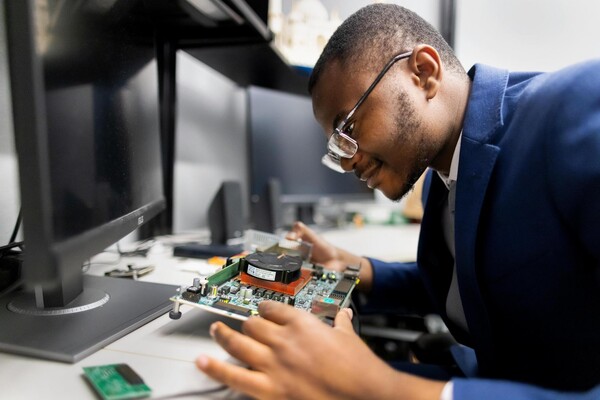
Fluid Silicon, a platform from President’s Sustainability Prize winner Nhlanhla Mavuso, allows computer chips to continuously monitor their health and self-tune as their characteristics change. The technology has the potential to reduce energy usage in data centers and improve reliability in mission-critical applications.