Works from 1923 have entered the public domain after a 20-year extension on copyright protections. The Penn Libraries is digitizing unique works to share.
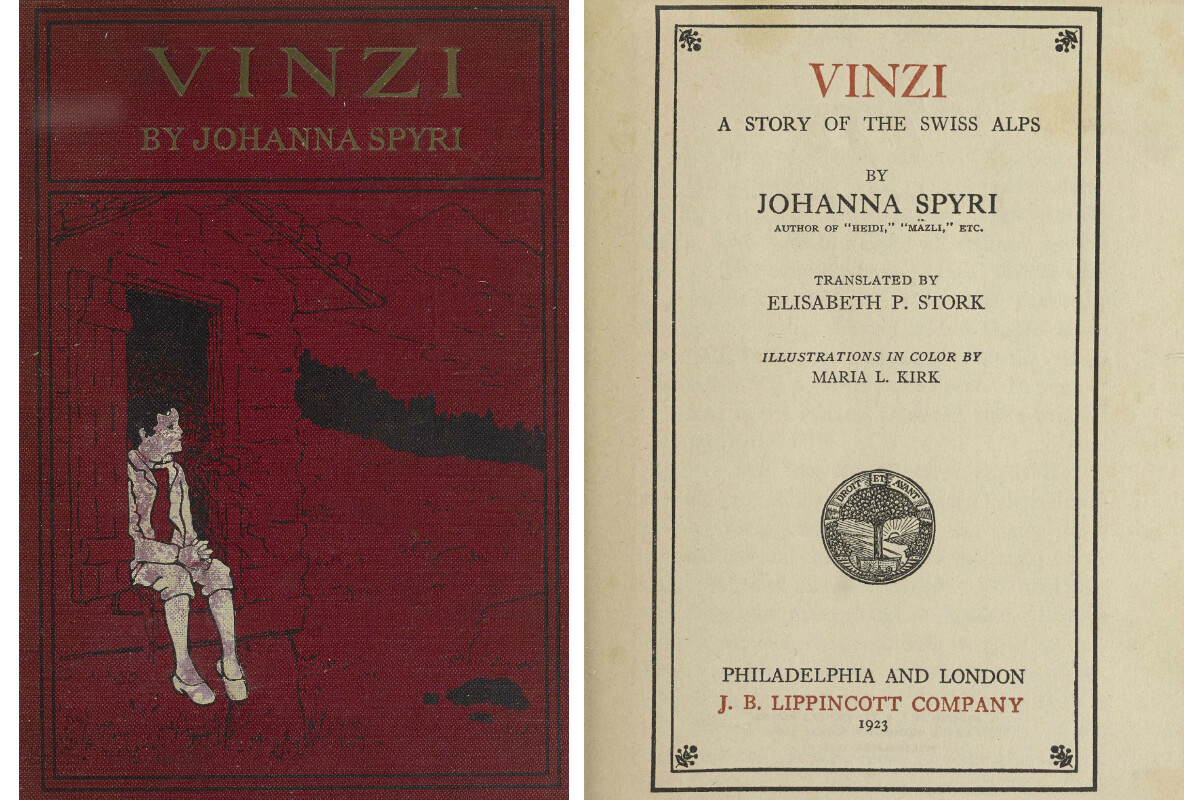
The Penn Libraries is digitizing and sharing books published in 1923 that have come into the public domain. One is "Vinzi a Story of the Swiss Alps," by Johanna Spyri, author of the more-famous "Heidi." The edition is the first U.S. translation to English from German, published in Philadelphia.
For the first time in 20 years, copyrights on published works expired this month, bringing into the public domain works first published in the United States in 1923, including many little-known books in the Penn Libraries.
The Libraries, which holds more than 9,000 works from 1923, has embarked on a year-long project to digitize and share selected books through a partnership with the HathiTrust, an online collection of millions of titles from libraries around the world freely available to the public.
University of Pennsylvania experts in libraries, media, law, and business applauded the release of creative works from copyright protection on Jan. 1, allowing books, poems, films, music, photographs, and other creative works to be reprinted and reimagined without permission or fear of copyright infringement.
“It’s inspiring as a librarian to take works that have been hidden in our collections and open them up now, not just to the Penn community, but to the world. That’s incredibly exciting,” says Brigitte Burris, assistant university librarian for collections.
“I can guarantee that nobody was reading obscure works in our collection from 1923 about prohibition, but now they’re out there, able to be Googled, able to be found,” she continued.
Texts such as “Alcohol and Prohibition in their relation to Civilization and the Art of Living” might be interesting to researchers today, Burris speculates. Another book digitized by the Libraries is “Vinzi, a Story of the Swiss Alps,” written by Johanna Spyri, known for “Heidi,” which can now be reprinted, reused, and reimagined.
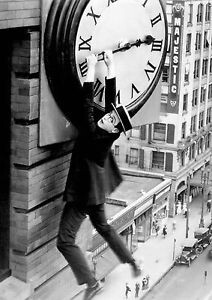
Many well-known works that have just come into the public domain include the poetry collection “New Hampshire” by Robert Frost, which includes “Stopping by Woods on a Snowy Evening.” Other works include the novel “Tarzan and the Golden Lion” by Edgar Rice Burroughs, the song “Yes! We Have No Bananas,” the film “Safety Last!” starring Harold Lloyd, along with other notable plays, music, photographs, and more.
The silent film "Safety Last!" is famous for a scene with actor Harold Lloyd hanging from a hand on a giant clock face high up on a tall building.
Studies show that most works have little or no commercial value only a year after being published, says Decherney, who is teaching the freshman seminar Copyright and Culture this semester.
“The longer works stay privately held, the longer it takes society to reap the full benefits from the works,” he says. “They may have more commercial value as people access them and reuse them and make inexpensive publications of books or recordings of songs.”
As a cinema studies professor, Decherney is especially pleased with this event. Now, he and his colleagues can access and show many films much more easily in class. Some movies coming into the public domain from 1923 include “The Pilgrim” directed by and starring Charlie Chaplin, “The Ten Commandments” by Cecil B. DeMille, and “Safety Last!” which features Buster Keaton famously hanging from the hands on a huge clock.
Congress determines copyright terms, which have been changed many times over the years. The 20-year hiatus was due to what is nicknamed the “Mickey Mouse Protection Act,” a 1998 law that extended copyright terms by 20 years, and was lobbied for heavily by The Walt Disney Company. Congress mandated that all works published after 1922 were subject to a 70-year period of copyright protection after the author’s death, or 95 years after publication in the case of works made for an employer. There are other terms depending on various factors as well as exceptions to all of those rules.
“It is complicated. We’ve spent two hours on duration in my copyright class,” says Penn Law Professor Shyamkrishna Balganesh.
Copyrights were always meant to expire, Balganesh says.
“That’s how the Constitution states “limited times.” Article 1, Section 8, Clause 8, empowers Congress to pass copyright laws. But in doing so, it states very clearly that it has to be for limited times,” Balganesh says. “Copyright must end on works: This was always the design.”
Balganesh says that although Congress could extend copyright protection again, he does not believe lawmakers will do so because the public mindset has changed over the past two decades.
“Most people today see copyright as being overprotective,” Balganesh says, calling the issue “politically volatile” and unlikely to be tackled. “For Congress to intervene in this climate and extend copyright retroactively for another 20 years would not go down well.”
In addition, technological advances and the internet have radically changed the landscape by providing many more ways to create and distribute works. “I’d be surprised if you could put the genie back in the bottle,” Decherney says. “Anyone can start a YouTube channel and put out content. The realm of creators has grown exponentially.”
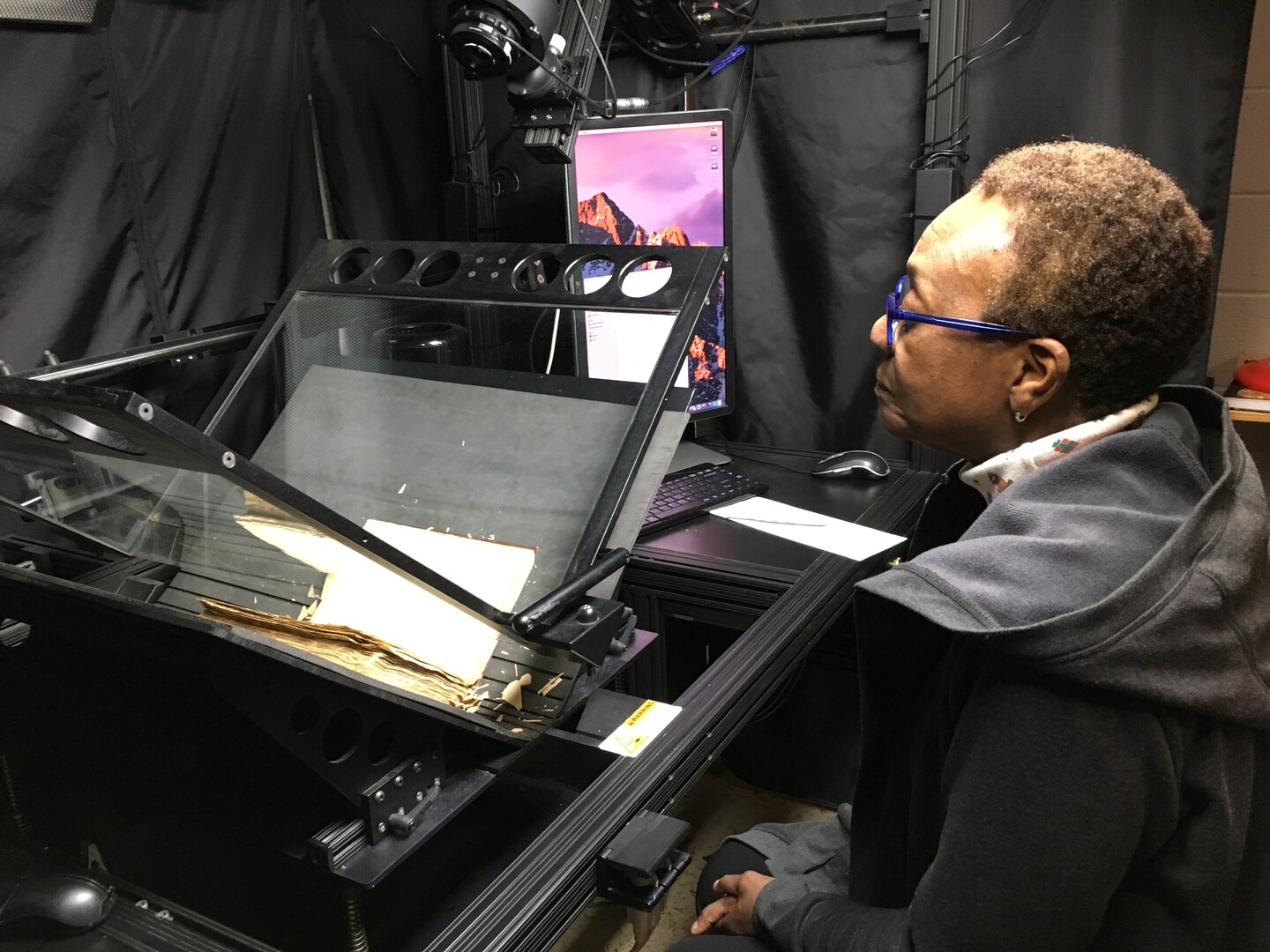
The project to digitize the books published in 1923 is conducted in the Libraries' Schoenberg Center for Electronic Text & Image. Shirley Albergottie-Amoah, a bibliographic assistant, is part of the project team. (Photo by Sara Vilanova.)
In short, the consumer benefits, says Balganesh. Although original and unrevised editions might increase in price, he notes that, “While access goes up, and prices go down. Publishers will adapt to the marketplace.”
Yoram Wind, the Lauder Professor Emeritus of Marketing, agrees, but says that there is some worry by companies and estates about potential abuses in addition to lost income.
“There is less control on quality and integrity of the work,” he says. “It is providing people new material and creativity, which is positive. One big question is to what extent it will be abused, and that’s something we don’t know.”
John Mark Ockerbloom, the Penn Libraries' digital library strategist who works with metadata, writes a popular blog, “Everybody’s Libraries.” In December he wrote daily posts highlighting particular items of interest from 1923, including books by Agatha Christie, Edith Wharton, P.G. Wodehouse, Virginia Woolf, Joseph Conrad, A.A. Milne and Zane Grey. The first on the list was “The Prophet,” a collection of prose fables by Lebanese-American poet Kahlil Gibran and one of the most translated works in the world.
The Libraries is focusing its digitization efforts on those that are not yet in the HathiTrust collection. So far, the Libraries has 800 of its books from 1923 digitized in the HathiTrust, and expects to digitize many more, says Burris, who oversees the general collection.
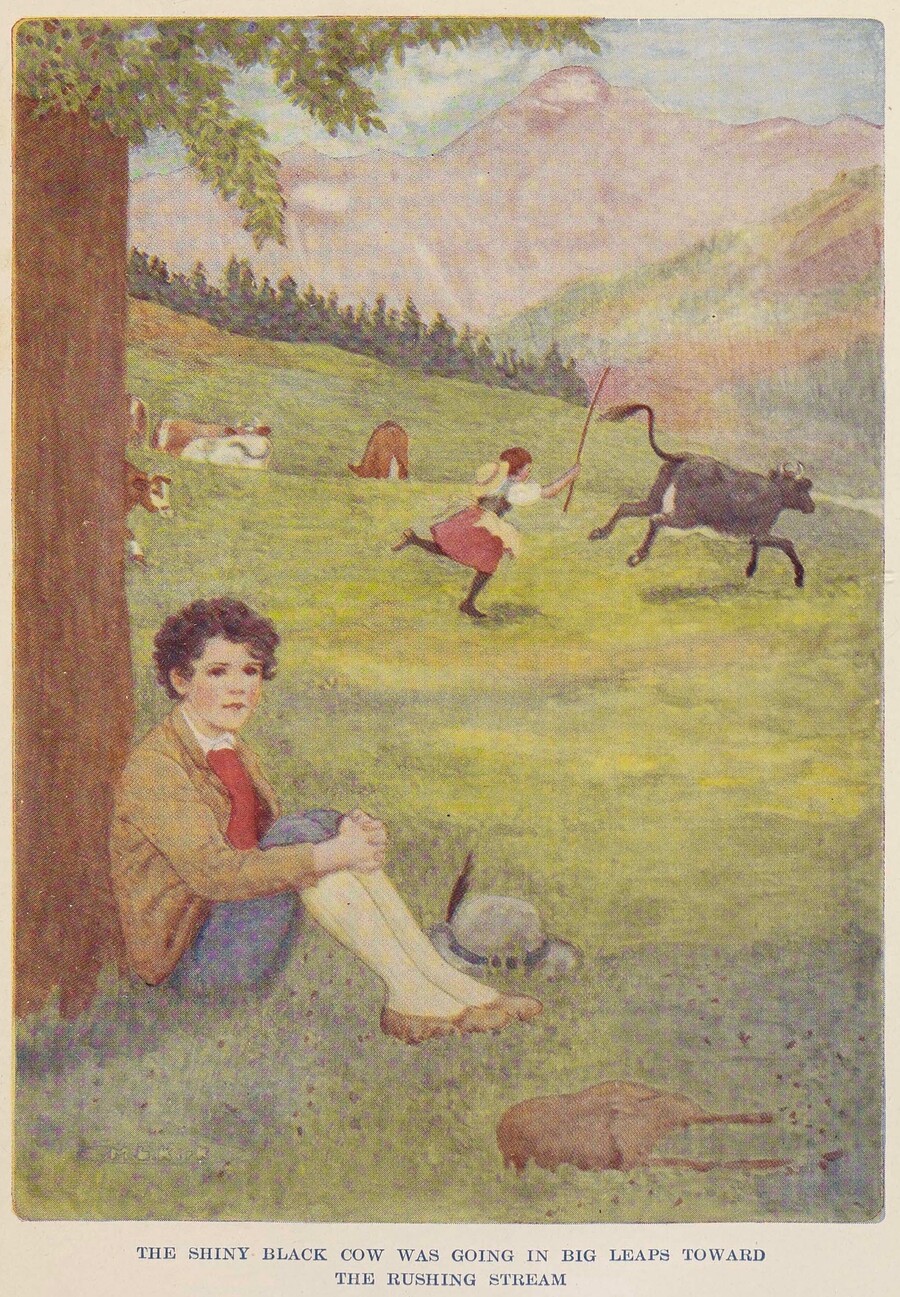
The just-digitized book "Vinzi" features eight color illustrations by Maria Kirk.
“The project closely aligns with the true mission of a research library, which is to make intellectual content available to the world as openly as possible,” Burris says. For now, Burris says that the effort will focus on printed materials as that is the strength of the collection from that period.
The Libraries team responsible for choosing books to be digitized is first focusing on works that were published in Philadelphia and that are unique to Penn’s collection, Burris says, “imprints that have Penn and Philadelphia written all over them.”
Condition of the book is also considered, since the material has to be able to withstand the digitization process. Every page is photographed by the Schoenberg Center for Electronic Text & Image.
“The fact we can digitize in-house is unusual, especially the size of our lab,” Burris says. “It allows us to digitize at a capacity others cannot.”
The first translation of Spyri’s “Vinzi,” written in German, was published in Philadelphia, by J.B. Lippincott Company. “Who knows what creative repurposing of “Vinzi” might come about?” Burris says.
Philadelphia had several important publishing houses similar to Lippincott a century ago, and many of those works ended up at Penn due to its prominence and proximity.
“A lot of the books that are unique to our collection from 1923 tend to match the strengths of university at that time, so we have a lot on dental medicine, medicine in general, and business,” she says, noting there is an audience for that material, such as scholars of the history of science.
In addition to texts chosen for digitization from fields ranging from dentistry, medicine, and engineering. Some are related to religion, like “Borrowed Axes and Other Sermons,” and specifically the University’s roots, like “Quaker Education in the Colony and State of New Jersey.” Creative works are included as well, such as “Songs for Men” and “Gilbert Stuart’s Portraits of George Washington,” and “Virginia Visits Santa Claus.”
“I’m eager to see what will come out of what is open to the world now,” Burris says. “It’s exciting to think about all the forms this new content is going to take.”
On the move: Water quality and antimicrobial resistance testing goes mobile
Penn researchers have developed a mobile field laboratory allowing them to test water quality and track antimicrobial resistance in and around San Cristóbal in the Galápagos.
Penn researchers Vanessa and Alexis North are studying one of the largest collections of Egyptian blue objects ever found in the ancient Near East, shedding new light on how the world’s first synthetic pigment may have traveled far beyond Egypt.
A new role for dental providers? Rethinking where vaccines are given
Vaccinations have traditionally been administered in primary care settings or pharmacies. However, for about a decade, some states have authorized dentists to administer vaccines, and many others did so during the COVID-19 pandemic. The effectiveness of this approach has led some countries and states to expand or consider expanding the role of dental providers in delivering routine vaccines, including those against COVID-19 and the human papillomavirus (HPV), and in providing vaccine education.
Penn student develops a way for computer chips to run more efficiently
Fluid Silicon, a platform from President’s Sustainability Prize winner Nhlanhla Mavuso, allows computer chips to continuously monitor their health and self-tune as their characteristics change. The technology has the potential to reduce energy usage in data centers and improve reliability in mission-critical applications.