Senior Adithya Sriram is busy earning two degrees, researching new applications for graphene, and preparing physics courses for students in West Philadelphia.
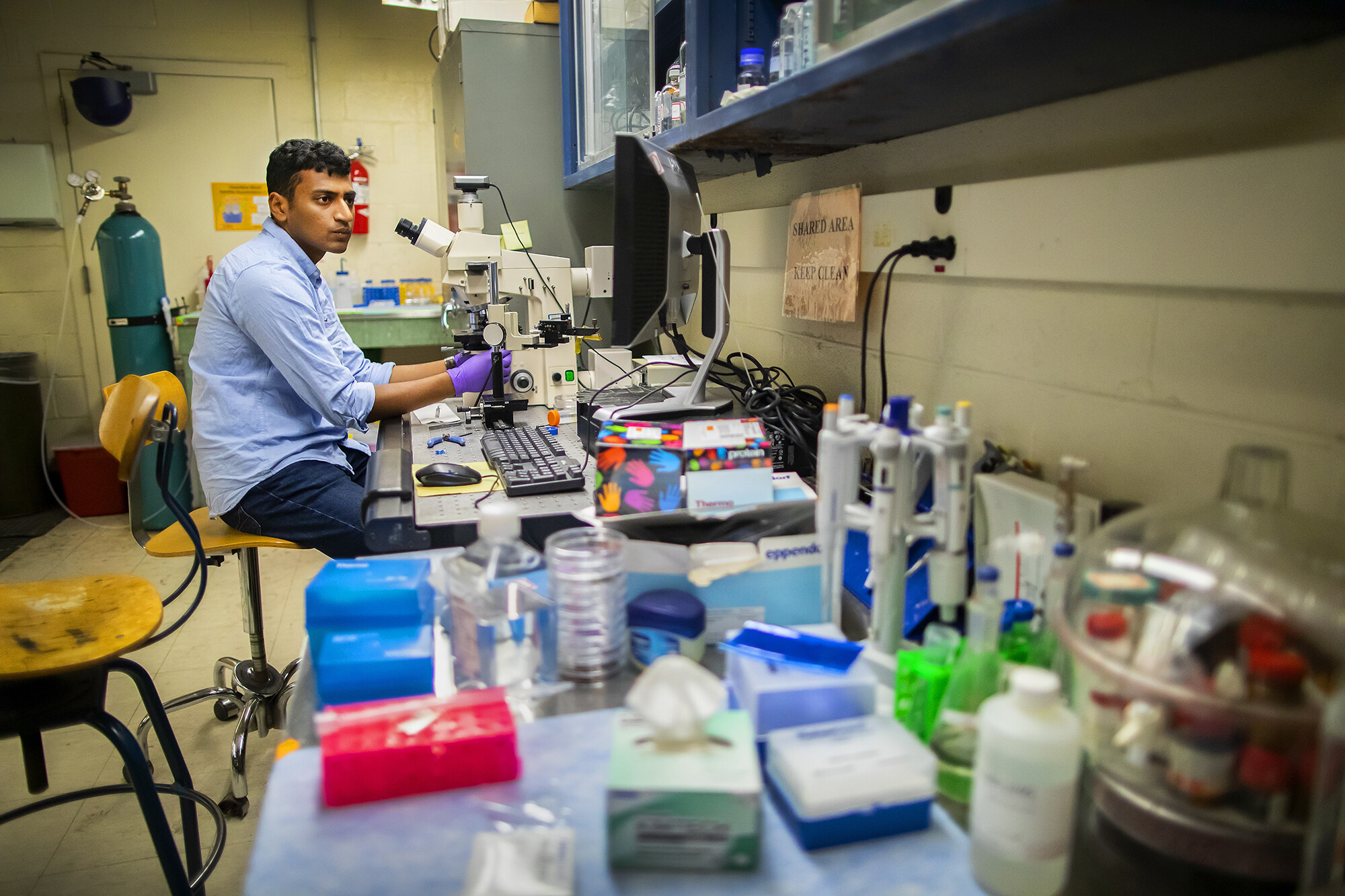
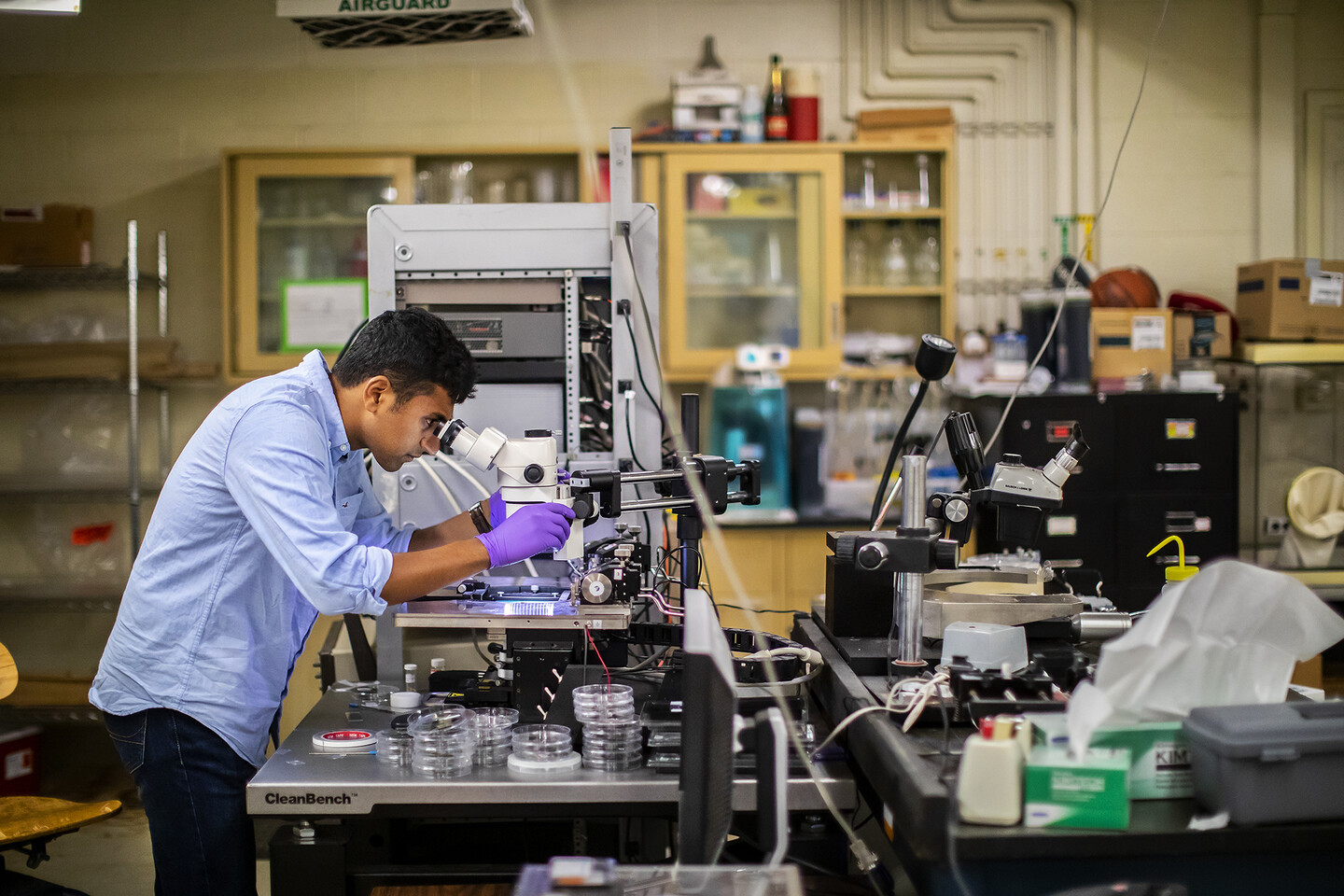
Senior Adithya Sriram does research on new applications for graphene in the lab of Charlie Johnson. The work mirrors his own path at Penn as part of the Vagelos Integrated Program in Energy Research, where he will earn degrees in both physics and engineering while doing research that bears similarities to both disciplines.
Adithya Sriram has always had an interest in physics. But after learning about Penn’s Vagelos Integrated Program in Energy Research (VIPER), he decided that the chance to study both physics and chemical engineering was one he couldn’t turn down. “I wasn’t going to do engineering, but the fact that I got into this program afforded me the opportunity,” says the senior from Columbus, Ohio.
A joint initiative between the School of Arts and Sciences and the School of Engineering and Applied Science, VIPER enables students to earn degrees from both schools while also conducting summer research projects. For Sriram, that has entailed working in the experimental nanoscale physics lab of Charlie Johnson since the summer following his freshman year, developing graphene field effect transistors to detect biological molecules such as proteins or DNA in biological samples. And to top things off, he and a group of Penn students travel to Paul Robeson High School each Friday to teach physics to 10th graders.
Transistors are found everywhere in modern electronics, enabling the creation of small, inexpensive devices from radios to clocks to computers. Using a voltage signal, the transistor can control the flow of electrons, switching between an “on” and “off” state.
To broaden the application of transistors to disease diagnosis, the Johnson lab focuses attention on transistors’ transitional state, between “on” and “off,” where the device is extremely sensitive and the flow of electrons can be precisely measured.
Using atomically-thin graphene as a starting point, the transistors can be customized to detect a wide range of targets based on the biological molecule that the researchers attach to the graphene. In a typical week, Sriram spends his time synthesizing new devices, testing the sensor’s response against known concentrations of biomarkers, and figuring out what changes can be made to the structure of the material to improve its sensitivity.
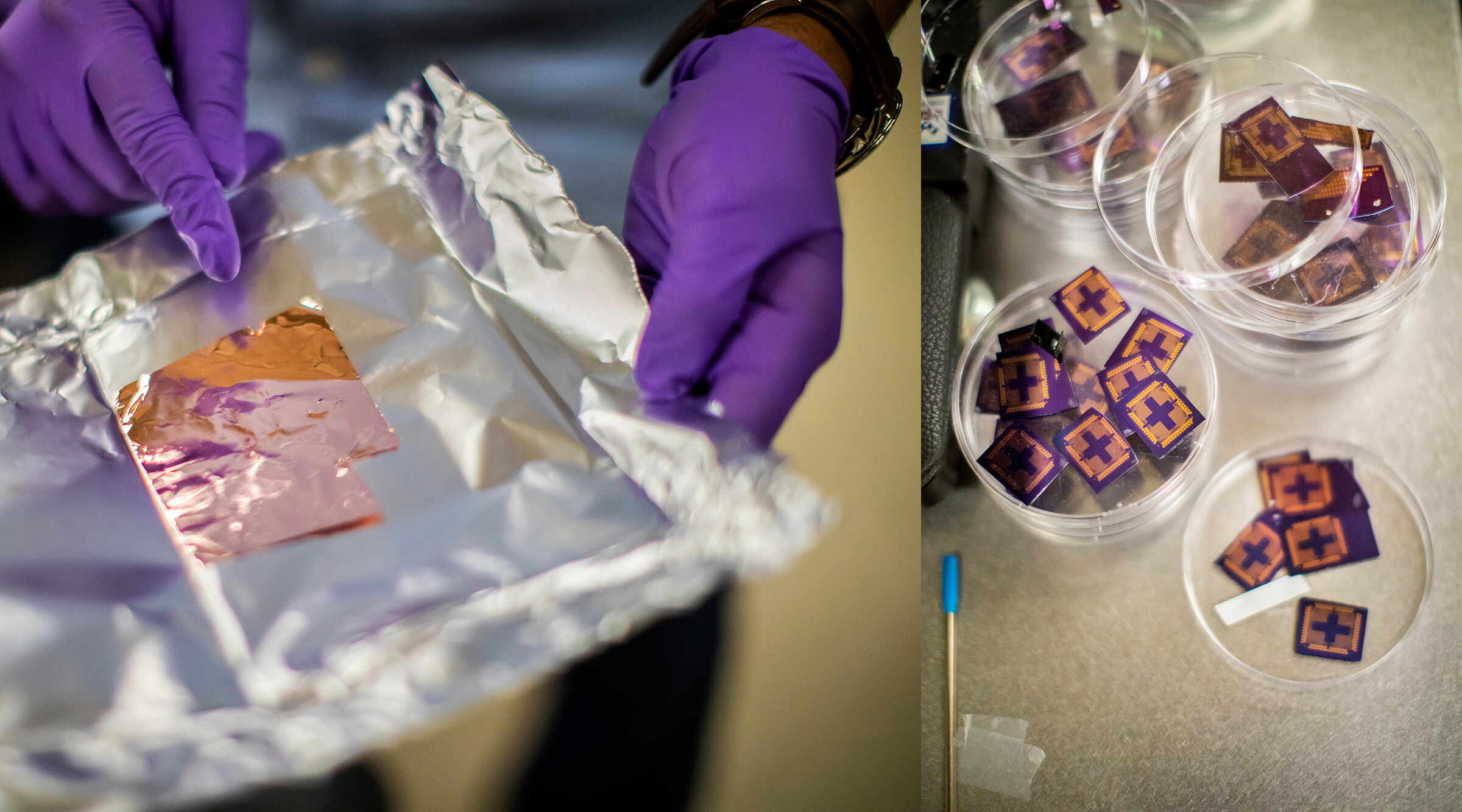
Atomically-thin sheets of graphene are synthesized onto copper foil (left) then placed onto electronic chips (right) for characterization in the lab.
The goal is to use these devices to detect disease biomarkers, biological molecules that can help diagnose diseases before symptoms appear. To make progress, Sriram spearheaded a collaboration with Kelvin Luk at the Center For Neurodegenerative Disease Research to add aptamers, small chains of DNA that work as sensors for a wide array of biological molecules, onto graphene devices. “He went and found a collaborator at Penn—only one other student has ever done that before. Understanding that there’s a connection and realizing that it’s a real opportunity are terrific things.”
Sriram also helped generate preliminary data that was part of a recently funded NIH grant with engineer David Issadore for developing a filtration process that will make it easier to measure small amounts of biological materials in complex samples like blood or cerebral spinal fluids, work that could help transforms the Johnson lab’s transistors into compact, handheld devices. “There’s still basic science that we need to look at, there’s still applied science that we’re doing, and Adithya has done a great job embracing that challenge,” says Johnson, adding that their group has only recently started to look more closely at direct applications.
Outside of courses and lab work, Sriram and senior Alex Zhou from Yorktown, Virginia, serve as teaching assistants for an academically-based community service (ABCS) course for Penn students. With guidance from physics professors Philip Nelson and Masao Sako, Sriram and Zhou develop the curriculum for an introductory physics course that Penn students implement in hands-on and inquiry-based physics labs for high schoolers, with ABCS support provided by the Barbara and Edward Netter Center for Community Partnerships. Every Friday, the Penn students and Nelson travel to Paul Robeson High School—not far from Penn’s campus—and lead three hours of teaching and demonstrations for a group of 20 tenth graders based on the newly developed curriculum.
The goal of the course is to provide Penn students with high school teaching experience while giving science-minded tenth graders a chance to see physics in action. “We’re trying to give some authentic science experience,” says Nelson, adding that Sriram and Zhou have taken the lead and reinvented this community service course from scratch.
Sriram has a strong interest in science outreach, something he hopes to continue doing in the next stage of his career. It’s a challenging endeavor that Nelson says Sriram has embraced extremely well. “Adithya and Alex have had to reach back into their past, to things that confused them at first. It takes an element of empathy that goes beyond just knowing the science.”
Sriram has worked in Johnson’s experimental nanoscale physics lab since the summer after his freshman year.
Now busy with his final year of courses and his senior capstone project, Sriram is actively applying for graduate schools. He says that being in the VIPER program was a great opportunity to learn about a number of different topics, including biology courses and advanced graduate-level electives. “As of now I’m more interested in pursuing fundamental physics, though later I might consider trying to get into policy,” he says. “If I do, I foresee knowledge of the energy industry and chemical engineering to be useful.”
With perspectives from physics and engineering, a solid grounding in fundamental research, and his time spent teaching, Sriram is bound to make an impact regardless of where he lands. “He has a plan, and a goal, and a lot of energy,” says Nelson. “What makes my job exciting and rewarding is that I see students that fill me with hope about the future.”
Johnson adds that the Roy and Diana Vagelos endowed programs, including the Life Sciences and Management and the Molecular Life Sciences programs, have positively impacted Penn while providing students with a strong grounding in fundamental science. “Science is about phenomena, discovering new things, but solving a problem is another layer. Engineers get told that they can solve problems, and I think if you can combine that attitude with a really deep understanding of the basic science, that’s a real combo.”
On the move: Water quality and antimicrobial resistance testing goes mobile
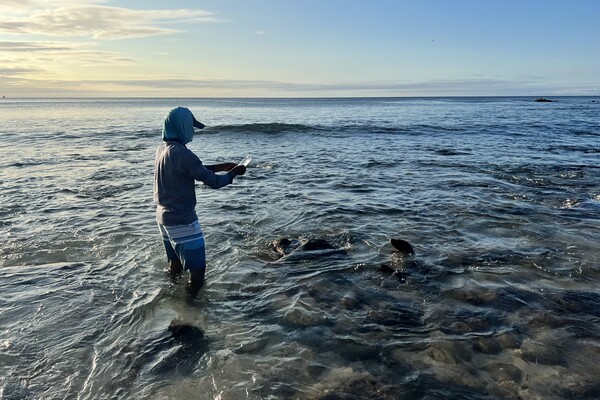
Penn researchers have developed a mobile field laboratory allowing them to test water quality and track antimicrobial resistance in and around San Cristóbal in the Galápagos.
Penn researchers Vanessa and Alexis North are studying one of the largest collections of Egyptian blue objects ever found in the ancient Near East, shedding new light on how the world’s first synthetic pigment may have traveled far beyond Egypt.
A new role for dental providers? Rethinking where vaccines are given
Vaccinations have traditionally been administered in primary care settings or pharmacies. However, for about a decade, some states have authorized dentists to administer vaccines, and many others did so during the COVID-19 pandemic. The effectiveness of this approach has led some countries and states to expand or consider expanding the role of dental providers in delivering routine vaccines, including those against COVID-19 and the human papillomavirus (HPV), and in providing vaccine education.
Penn student develops a way for computer chips to run more efficiently
Fluid Silicon, a platform from President’s Sustainability Prize winner Nhlanhla Mavuso, allows computer chips to continuously monitor their health and self-tune as their characteristics change. The technology has the potential to reduce energy usage in data centers and improve reliability in mission-critical applications.