From the Archives: Raymond and Sadie Alexander family home movies
Dating from 1930 to 1961, the film collection documents the personal and professional lives of Penn trailblazers Raymond Pace Alexander and Sadie Tanner Mossell Alexander.
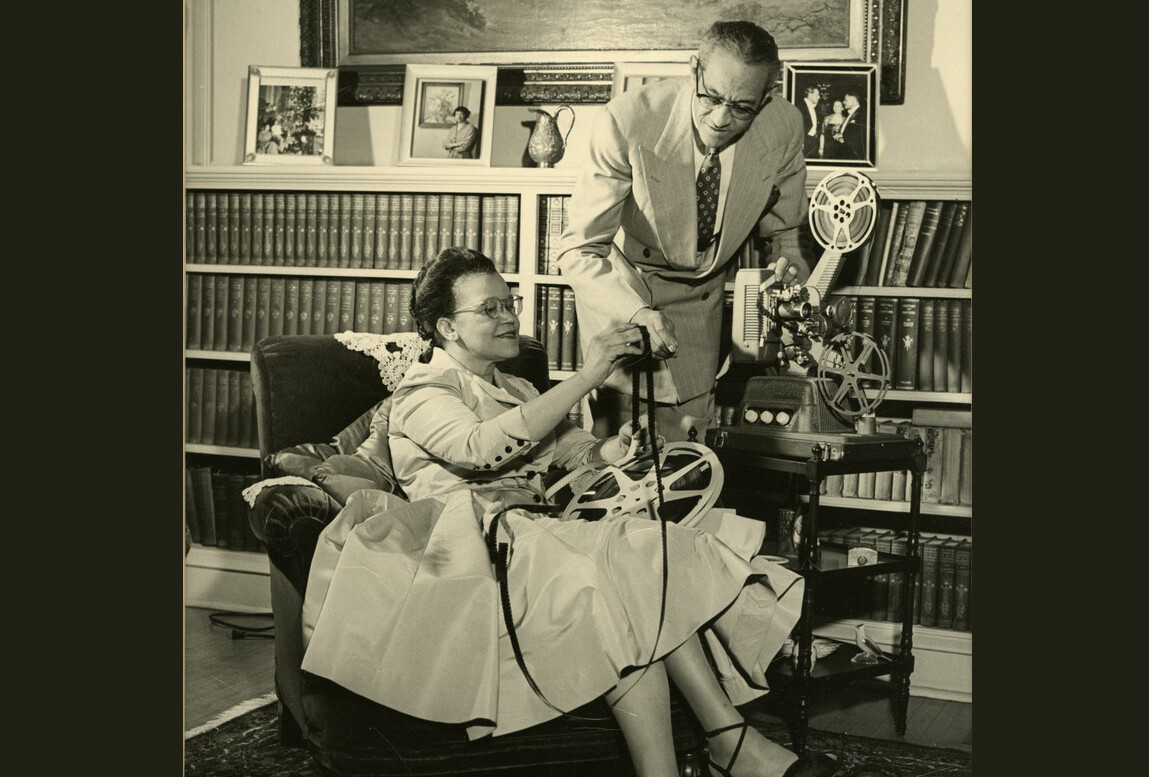
Penn alumni Sadie Tanner Mossell Alexander and Raymond Pace Alexander in their North Philadelphia home, 1708 W. Jefferson St., in 1952, looking at some of their home movies, which are in the University Archives and Records Center.
In 1921, Sadie Tanner Mossell Alexander became the first African American woman to earn a Ph.D. at Penn after earning a bachelor’s degree in 1918, and a master’s degree in economics in 1919. She went on to become the first African American woman to earn a law degree from Penn, in 1927. With degrees from the Wharton School and Harvard Law, her husband Raymond Pace Alexander established a legal practice in Philadelphia to serve African American and underrepresented communities.
The couple became well known for their legal work, particularly their civil rights cases fighting discrimination and segregation.
More than 100 black-and-white and color 16mm silent films are included in the Alexander Family Papers collection, says J.M. Duffin, assistant University archivist. The films document the professional and personal lives of Raymond and Sadie Alexander, as well as some of their family members. The University Archives digitized some of the films, starting in 2018. Duffin wrote about the process in a Unique at Penn blog post.
“The Alexanders are two very significant Penn alumni from the 20th century who had a major impact as leaders in the African American community,” Duffin says.
“These films give a fresh perspective on the Alexanders, who they were and also the people they interacted with,” says Duffin. “A nice thing about the films is that they capture them in several different settings. They document the private as well as public life of the Alexanders and offer a rare motion picture glimpse into the world of an upper-middle-class Philadelphia African American family.”
The films provide a glimpse into the Alexander’s prominent role in the national Civil Rights Movement. The oldest films in the collection are from 1930, Duffin says, including footage from the 1930 meeting at Howard University of the National Bar Association, founded in part by the Alexanders in 1925 when African Americans were denied membership in the American Bar Association. Another 1930 meeting captured is the National Urban League in Buffalo, which shows Thurgood Marshall, who would become a U.S. Supreme Court Justice. Other group events found in the collection include the 1932 Republican National Convention in Chicago.
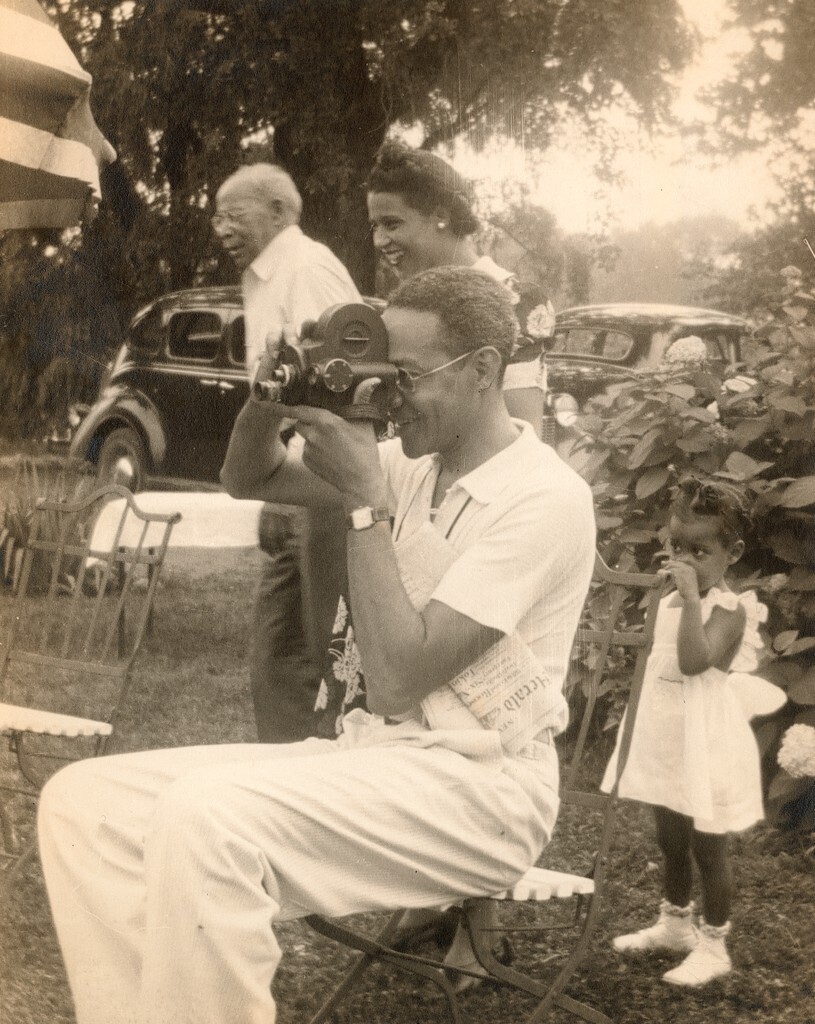
Raymond Pace Alexander with a Bell & Howell Filmo movie camera in about 1940.
(Image: University Archives and Records Center)
The footage also includes footage of trips made by Raymond and Sadie Alexander to Europe in 1930 and 1931. Their first trip was to France, Germany and England; when in France, they visited Sadie’s uncle, the artist Henry Ossawa Tanner. In 1931 the Alexanders visited Germany and the Soviet Union; where they were invited to attend a session of a Soviet court and allowed to film it. The Alexanders’ trips to the Caribbean in the 1930s and ’40s provide a glimpse at communities in Haiti, Santo Domingo, St. Thomas, St. Croix, Jamaica, and Martinique
The availability of amateur or home-movie cameras in the U.S. began in the early 1920s, after Kodak created a motion-picture camera and an infrastructure across the country to process the 16mm non-flammable safety film (cellulose acetate). The Alexanders had a Bell & Howell Filmo camera. Duffin says that the Alexanders likely hired a professional film editor to put together some of the footage because there are intertitles or tile cards, common to silent films, identifying locations and sometimes individuals.
The films are important for many reasons, including research: Some footage was included in a PBS series American Masters documentary that aired in 2022, “Marian Anderson: The Whole World in Her Hands.” The footage with Henry Ossawa Tanner was included in “Myth of a Colorblind France,” a documentary about African American artists who had moved to Paris.
The Archives collects personal papers of alumni “because it’s part of preserving the history of the University, and part of that history is how Penn affects the world,” Duffin says.
From the Archives features items in Penn’s University Archives & Records Center, which holds University records and materials related to faculty and alumni.
On the move: Water quality and antimicrobial resistance testing goes mobile
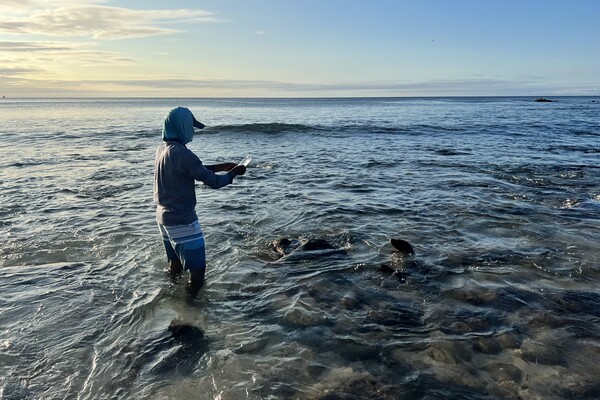
Penn researchers have developed a mobile field laboratory allowing them to test water quality and track antimicrobial resistance in and around San Cristóbal in the Galápagos.
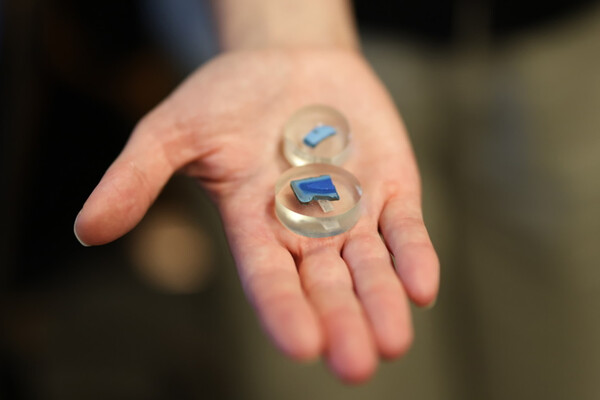
Penn researchers Vanessa and Alexis North are studying one of the largest collections of Egyptian blue objects ever found in the ancient Near East, shedding new light on how the world’s first synthetic pigment may have traveled far beyond Egypt.
A new role for dental providers? Rethinking where vaccines are given
Vaccinations have traditionally been administered in primary care settings or pharmacies. However, for about a decade, some states have authorized dentists to administer vaccines, and many others did so during the COVID-19 pandemic. The effectiveness of this approach has led some countries and states to expand or consider expanding the role of dental providers in delivering routine vaccines, including those against COVID-19 and the human papillomavirus (HPV), and in providing vaccine education.
Penn student develops a way for computer chips to run more efficiently
Fluid Silicon, a platform from President’s Sustainability Prize winner Nhlanhla Mavuso, allows computer chips to continuously monitor their health and self-tune as their characteristics change. The technology has the potential to reduce energy usage in data centers and improve reliability in mission-critical applications.