In a Q & A, archaeologist and PIK Professor Lynn Meskell discusses her background, the subjects that interest her—from espionage to World Heritage sites—and collaborations that have organically arisen at Penn despite the pandemic and a mostly remote first year.
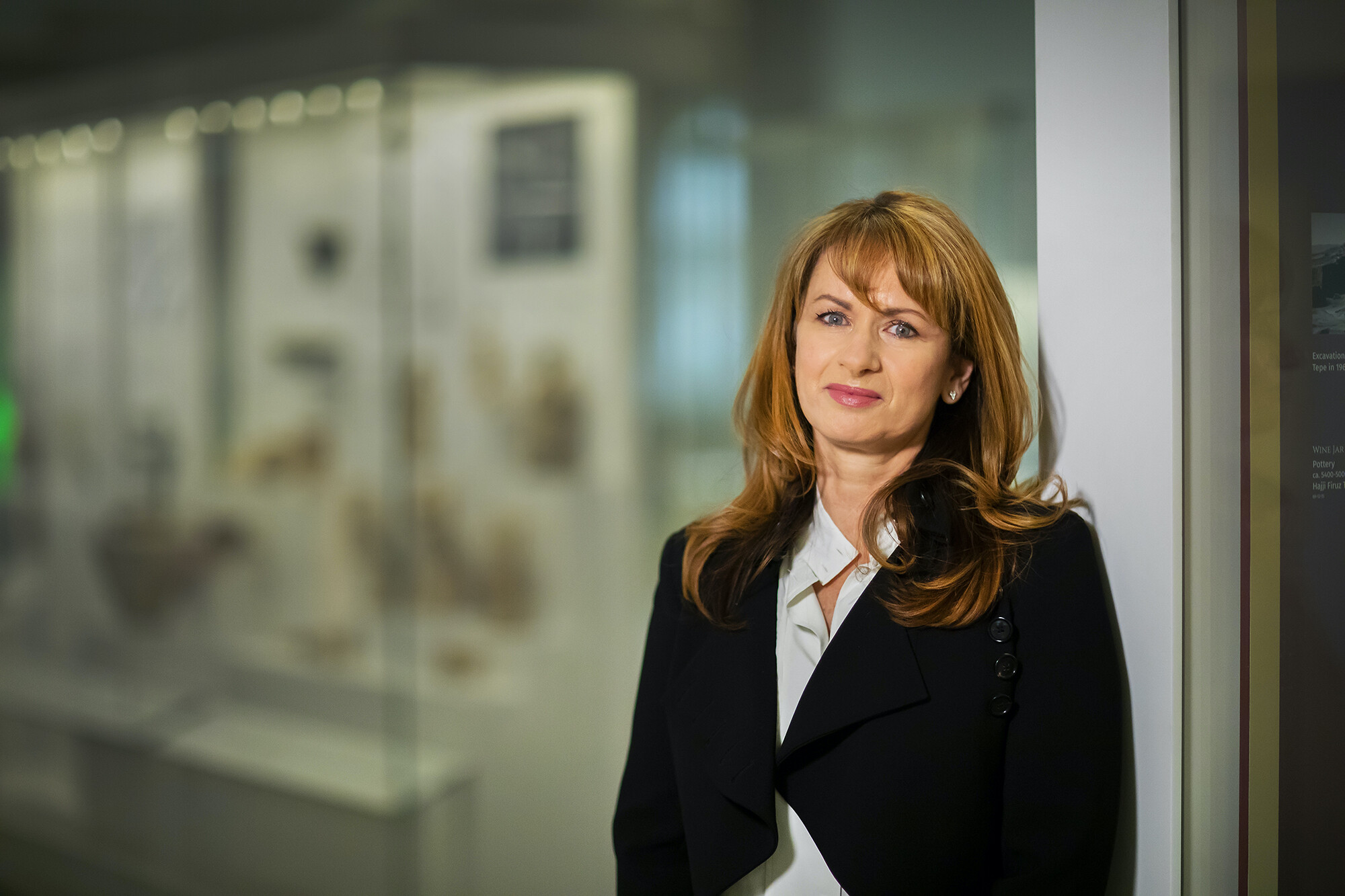
Lynn Meskell is the Richard D. Green Penn Integrates Knowledge University Professor in the Department of Anthropology in the School of Arts & Sciences, a professor in the Department of City and Regional Planning and the graduate program in Historic Preservation in the Stuart Weitzman School of Design, and a curator in the Middle East and Asia sections at the Penn Museum.
(Image: Eric Sucar)
For as long as she’s been an archaeologist, Penn Integrates Knowledge University Professor Lynn Meskell has studied the 99%. “I always thought it offered a skewed picture to just look at pharaohs and monuments,” she says. “I wanted to focus on ordinary people, not the elites.”
It’s a lens she’s used to study a range of subjects: social issues in ancient Egypt, the role of archaeology and heritage in post-apartheid South Africa, heritage and human rights, who wins or loses when it comes to UNESCO World Heritage sites in India and elsewhere.
“I’ve worked at many sites on the World Heritage List,” says Meskell, who has appointments in the School of Arts & Sciences and Stuart Weitzman School of Design and at the Penn Museum. “Every country is trying to get sites listed. There’s an uplifting idea that this type of conservation brings the world together, but what I learned quickly is that everyone is playing a game that has little to do with conservation and everything to do with international power and politics.” To that end, Meskell is teaming with Wharton’s Witold Henisz to understand the relationship between World Heritage, conflict, and risk, funded by Penn’s Global Engagement Fund.
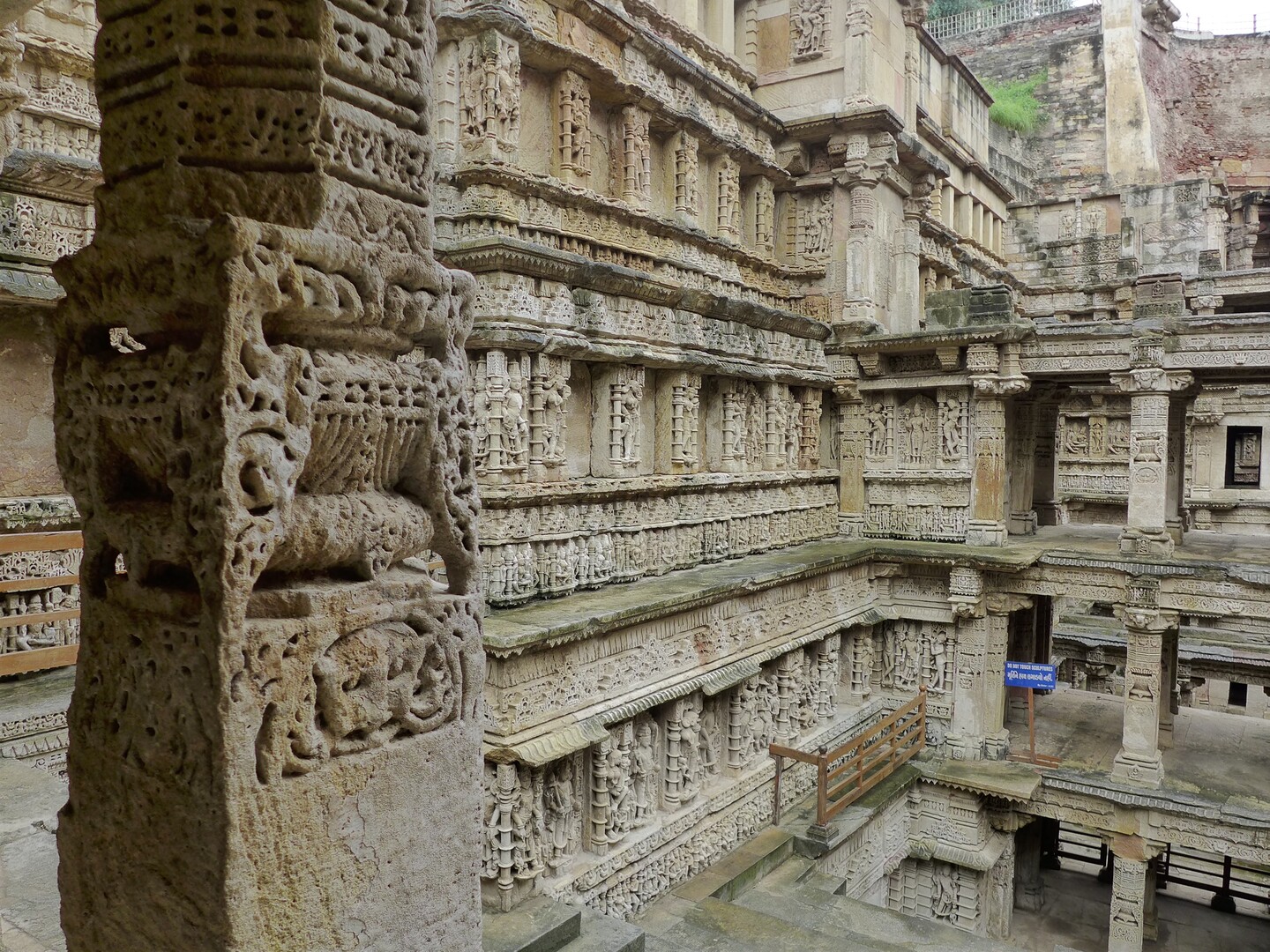
The Rani-ki-Vav UNESCO World Heritage site in Gujarat, India. Meskell has done fieldwork here and at many other such places, as part of her research on heritage and human rights. (Image: Courtesy of Lynn Meskell)
Meskell’s latest project focuses on the academic-military-industrial complex, with a forthcoming paper in American Anthropologist on the role of Froelich Gladstone Rainey, Penn Museum’s director starting in the late 1940s. After World War II, Rainey helped develop and trial technological advancements in atomic archaeology that forever changed the field.
Penn Today spoke with Meskell about her research on Rainey, her background, and about collaborations like the one with Henisz that have organically taken shape despite the pandemic and a mostly remote first year at Penn.
When did your interest in archaeology take hold?
I have always worked on several projects simultaneously, even as an undergrad and certainly as a grad student. I would do archaeological research and fieldwork and I also had an interest in the politics of archaeology. From the start, I was writing and publishing on those two aspects.
As a grad student—I did my Ph.D. in Cambridge—I was working on ancient Egyptian archaeology and social issues, but at the same time I edited a book called ‘Archaeology Under Fire,’ which was about the politics of archaeology and heritage in the Middle East and Mediterranean. So even then, I had the two interests going, and they really are inseparable.
What do you mean by that?
We can’t study the past in isolation. It must be considered in the context of today and today’s politics, who wins or loses with our kind of work, and the research and narratives that we produce.
For my Ph.D. I examined an Egyptian village called Deir el Medina, how the ancient Egyptians considered things like class, gender, sexuality, race, and slavery, how differently they understood and experienced those categories. Ironically, we now call that approach intersectionality, the intersection of age, sex, class, etc. This was in the time of Tutankhamen and Ramses II, but always my focus was on ordinary people, not the elites.
Why do you think you skew toward that group?
Probably because of my own background. I grew up in a small town in Australia, where education wasn’t a priority—sport was. My parents never finished high school. The people around me did not go to university. So, I guess I was drawn to the bulk of the population, the people who were not at the top of the pyramid.
How did you go from studying ancient Egypt to post-apartheid South Africa?
I was in New York City teaching at Columbia University on 9/11, and I started to write about memory, memorialization, trauma, how people dealt materially with what happened at Ground Zero. Through that work, I was invited to South Africa to lecture.
Even in the final years of apartheid, there was a lot of censorship, and nothing prepared me for what I saw in South Africa. I was writing about past-mastering, how people materially commemorate or erase the traumatic past, and South Africa was the perfect example. I began looking at the role of archaeology and heritage post-apartheid, specifically in Kruger National Park. I also did fieldwork at Mapungubwe World Heritage site, and that helped me transition to the UNESCO research.
UNESCO’s World Heritage program is often upheld as a model in preserving natural and cultural heritage, yet your research revealed something different?
At the end of the Second World War, we saw a brand of internationalism that aimed to bring nations together. It turned out to be a very short-lived dream. Today, the most powerful players use World Heritage nominations as proxies, as bargaining chips in the midst of conflict and big business. That’s been true pretty much everywhere I’ve lived and worked. Russian intervention in Syria at the site of Palmyra, territorial tensions around cultural properties between Japan and China or Turkey and Armenia. All of this gets played out between sovereign nations and is about older conflicts and encroaching on sovereign borders.
And now you’re looking at it in India?
Yes, the India work was really a spinoff of my UNESCO work. Again, it’s about who gets cleaned up and cleared out to make monuments attractive to foreign dollars and tourists. These actions extend beyond monuments and can involve whole landscapes.
In the case of India, there are more than a billion people and many thousands of historic sites. It’s the densest I’ve seen anywhere in the world, so people are naturally living in and amongst those remnants of the past, and it poses enormous problems. What do you choose to conserve and how? Who decides? Then there are simmering conflicts over religion, language, caste differences. I see a lot of parallels with South Africa, too, where the colonial past is still very present. And then there are the military, industrial, corporate, and political aspects of this kind of heritage work.
Where does Rainey fit?
I arrived at Penn in a pandemic, and for the first time in 25 years or more I couldn’t travel abroad to do fieldwork. I knew the Penn Museum archives were incredible. I was looking at projects in the Middle East in the early 20th century that involved Penn and discovered the atomic legacy with Rainey. I’d met Susan Lindee, chair of the history and sociology of science department, at a workshop in Mexico and had read her book ‘Rational Fog,’ which dealt with atomic science. We ended up running a seminar together on nuclear applications at the Science History Institute in Philadelphia.
Rainey himself has a great story, untold in the history of global archaeology. After the war, he developed and trialed some of the incredible archaeological instruments we take for granted today to locate archaeological remains. He worked with Italian industrialists developing instruments to discover Etruscan tombs and on new submarine technology for underwater archaeology in Turkey. He corresponded with Glenn Seaborg, head of the Atomic Energy Commission, and developed equipment with Silicon Valley tech firms. He had contacts everywhere, including the State Department and CIA. It’s an incredible Cold War story, a history that’s not well known. Rainey had a remarkable vision for the future of archaeology.
Anything else you want to share?
In a pandemic, when we haven’t been on campus that much, it’s amazing that I have already been able to form incredible collaborations with people at Penn. Aside from Susan and Witold, I’ve begun work with Anjan Chatterjee at the Center for Neuroaesthetics, and I have a fellowship at Perry World House. That’s apart from my wonderful colleagues at Weitzman, in Arts & Sciences, and at the Penn Museum. These interconnections are only possible at Penn.
On the move: Water quality and antimicrobial resistance testing goes mobile
Penn researchers have developed a mobile field laboratory allowing them to test water quality and track antimicrobial resistance in and around San Cristóbal in the Galápagos.
Penn researchers Vanessa and Alexis North are studying one of the largest collections of Egyptian blue objects ever found in the ancient Near East, shedding new light on how the world’s first synthetic pigment may have traveled far beyond Egypt.
A new role for dental providers? Rethinking where vaccines are given
Vaccinations have traditionally been administered in primary care settings or pharmacies. However, for about a decade, some states have authorized dentists to administer vaccines, and many others did so during the COVID-19 pandemic. The effectiveness of this approach has led some countries and states to expand or consider expanding the role of dental providers in delivering routine vaccines, including those against COVID-19 and the human papillomavirus (HPV), and in providing vaccine education.
Penn student develops a way for computer chips to run more efficiently
Fluid Silicon, a platform from President’s Sustainability Prize winner Nhlanhla Mavuso, allows computer chips to continuously monitor their health and self-tune as their characteristics change. The technology has the potential to reduce energy usage in data centers and improve reliability in mission-critical applications.