Reducing susceptibility to misconceptions about mRNA vaccination
Researchers at the Annenberg Public Policy Center have tested the effectiveness of a ‘mental model’ approach to presenting scientific information, incorporating visual, verbal, or animated models to teach scientific or medical concepts to better identify misconceptions.
2 min. read
Correcting misinformation after it has gone viral is a common way of informing the public that what they’ve encountered may be inaccurate, lack context, be unproven, or be demonstrably false. But repeating a misconception when refuting it carries the risk of spreading it to a larger audience, especially because the people who read a fact-checking report may not be the same ones who were originally exposed to the worrisome information.
To overcome these challenges, researchers at Penn’s Annenberg Public Policy Center (APPC) have tested the effectiveness of a “mental model” approach to presenting scientific information. Such an approach entails exposing people to visual, verbal, or animated models to teach them scientific or medical concepts so that they either have the tools in place to identify misconceptions before encountering them or can use the model, once they learn it, to override existing misconceptions.
In a new study published in the Proceedings of the National Academy of Sciences, researchers led by APPC director Kathleen Hall Jamieson tested two mental model-based interventions to counter unwarranted fears about messenger RNA (mRNA) technology, the life-saving innovation that revolutionized COVID-19 vaccine creation. It is being used to develop vaccines against potentially deadly health risks including melanoma, pancreatic cancer, flu virus, respiratory syncytial virus, bird flu, HIV, dengue virus, and Lyme disease.
“We found that respondents who saw the problematic claims along with the mental models were more likely to answer questions in an evidence-based manner than those seeing the problematic claims alone,” Jamieson says. “These experiments suggest a promising approach for overcoming some of the challenges that face the usual uses of inoculation and fact-checking.”
On the move: Water quality and antimicrobial resistance testing goes mobile
Penn researchers have developed a mobile field laboratory allowing them to test water quality and track antimicrobial resistance in and around San Cristóbal in the Galápagos.
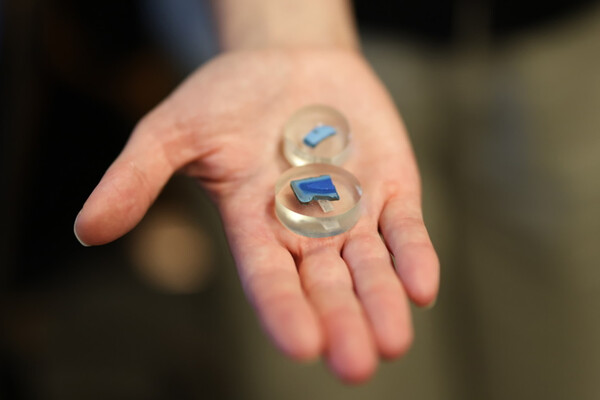
Penn researchers Vanessa and Alexis North are studying one of the largest collections of Egyptian blue objects ever found in the ancient Near East, shedding new light on how the world’s first synthetic pigment may have traveled far beyond Egypt.
A new role for dental providers? Rethinking where vaccines are given
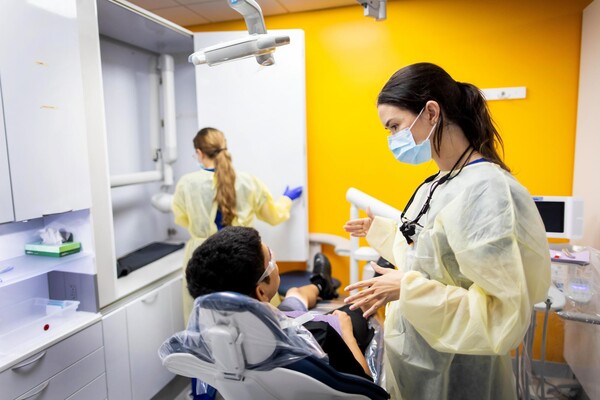
Vaccinations have traditionally been administered in primary care settings or pharmacies. However, for about a decade, some states have authorized dentists to administer vaccines, and many others did so during the COVID-19 pandemic. The effectiveness of this approach has led some countries and states to expand or consider expanding the role of dental providers in delivering routine vaccines, including those against COVID-19 and the human papillomavirus (HPV), and in providing vaccine education.
Penn student develops a way for computer chips to run more efficiently
Fluid Silicon, a platform from President’s Sustainability Prize winner Nhlanhla Mavuso, allows computer chips to continuously monitor their health and self-tune as their characteristics change. The technology has the potential to reduce energy usage in data centers and improve reliability in mission-critical applications.