AI uncovers potential antibiotics hidden in proteins linked to fatal brain disease
A Penn Medicine analysis led by César de la Fuente identifies hidden peptides that may kill drug-resistant bacteria.
2 min. read
New antibiotic candidates for drug-resistant bacteria may reside inside prions, misfolded protein in the brain best known for rare and fatal degenerative brain diseases. Prion and prion-like proteins may hide short peptides, named “prionins,” that can kill bacteria, suggesting proteins best known for their role in neurodegeneration may contain molecular features linked to immune defense, according to new research from the Perelman School of Medicine.
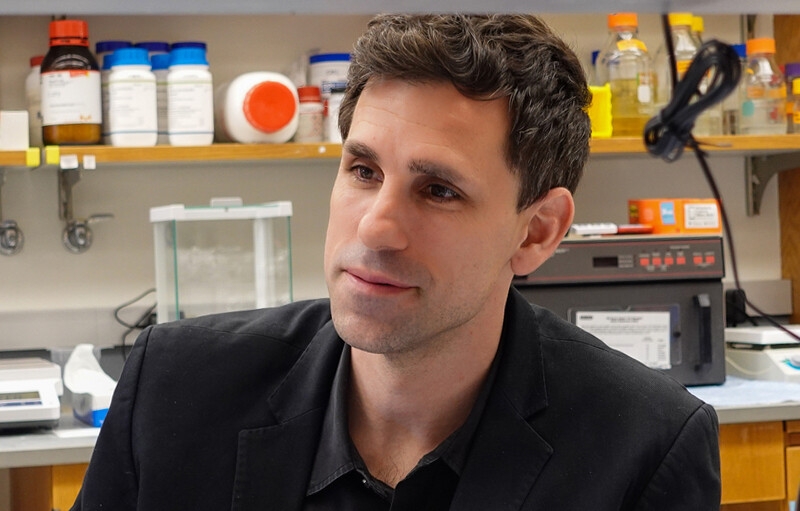
César de la Fuente, presidential associate professor, director of the Machine Biology Group, and senior author of the study.
(Image: Jianing Bai)
The findings build on the de la Fuente Lab’s broader effort to mine the biological world for “encrypted peptides”—short, hidden sequences inside larger proteins that can have biological functions when isolated. Previous work from the group has searched human proteins, extinct organisms, archaea, microbiomes, and venoms. The prion study expands that idea into one of biology’s most unexpected protein classes.
The research, published in Nature Microbiology, points to a surprising new place to search for antibiotic candidates at a time when drug-resistant infections are narrowing treatment options. The work also raises a broader biological question: whether proteins most often associated with neurodegeneration may contain hidden molecular features connected to innate immunity.
“This work changes where we think antibiotics might be hiding,” says César de la Fuente,presidential associate professor and director of the Machine Biology Group and senior author of the study. “Prions have long been seen almost entirely through the lens of disease, but AI let us ask a different question: whether these proteins also encode useful molecular fragments. The answer appears to be yes.”
The study team selected 75 of the most promising peptides for experimental testing based on how well the platform assessed they would perform against 11 different bacterial pathogens, including drug-resistant strains. Of those, 59 inhibited at least one bacterial pathogen, and 42 showed strong activity at low concentrations.
To verify these findings, researchers tested two of the most promising peptides—one from a fungus and one from a roundworm—in mice. They found that the approach reduced bacteria levels in a standard skin infection model caused by Acinetobacter baumannii, a difficult-to-treat pathogen. Their effects were comparable to polymyxin B, and researchers saw no treatment-related weight loss.
“This is where the story becomes more than a computer screen,” says Marcelo D. T. Torres, co-first author of the study. “The AI search gave us a short list of candidates, but the important point is that many of those molecules worked in the lab, and two worked in an animal infection model. That is what makes this a discovery platform, not just a prediction exercise.”
On the move: Water quality and antimicrobial resistance testing goes mobile
Penn researchers have developed a mobile field laboratory allowing them to test water quality and track antimicrobial resistance in and around San Cristóbal in the Galápagos.
Penn researchers Vanessa and Alexis North are studying one of the largest collections of Egyptian blue objects ever found in the ancient Near East, shedding new light on how the world’s first synthetic pigment may have traveled far beyond Egypt.
A new role for dental providers? Rethinking where vaccines are given
Vaccinations have traditionally been administered in primary care settings or pharmacies. However, for about a decade, some states have authorized dentists to administer vaccines, and many others did so during the COVID-19 pandemic. The effectiveness of this approach has led some countries and states to expand or consider expanding the role of dental providers in delivering routine vaccines, including those against COVID-19 and the human papillomavirus (HPV), and in providing vaccine education.
Penn student develops a way for computer chips to run more efficiently
Fluid Silicon, a platform from President’s Sustainability Prize winner Nhlanhla Mavuso, allows computer chips to continuously monitor their health and self-tune as their characteristics change. The technology has the potential to reduce energy usage in data centers and improve reliability in mission-critical applications.