AI tool, powered by nursing insight, cuts mortality
An artificial intelligence tool that analyzes nurses’ notes to predict patient decline significantly reduces mortality risk and shortens hospital stays, according to a study published in Nature Medicine.
The CONCERN Early Warning System, developed with nurse input, uses machine learning to detect subtle changes in patient conditions up to 42 hours earlier than traditional methods. The system analyzes electronic health record documentation patterns, such as the timing and frequency of assessments, and generates hourly risk scores.
The study, involving nearly 60,000 patients across two health systems, found a 35% reduction in mortality risk and an average half-day shortening of hospital stays. The system also helped prevent adverse events like sepsis.
“The CONCERN is a nurse-centered AI tool, which means it would not work without the decisions and expert opinions of nurses as its data inputs,” says Kenrick Cato, a professor and clinician-educator in the Department of Family and Community Health at the School of Nursing. “This technology empowers nurses and enhances their ability to provide timely, life-saving care.”
The research highlights AI’s role as a support tool, not a replacement for human expertise, and underscores its potential to improve clinical decision-making by leveraging nurses’ insights.
On the move: Water quality and antimicrobial resistance testing goes mobile
Penn researchers have developed a mobile field laboratory allowing them to test water quality and track antimicrobial resistance in and around San Cristóbal in the Galápagos.
Penn researchers Vanessa and Alexis North are studying one of the largest collections of Egyptian blue objects ever found in the ancient Near East, shedding new light on how the world’s first synthetic pigment may have traveled far beyond Egypt.
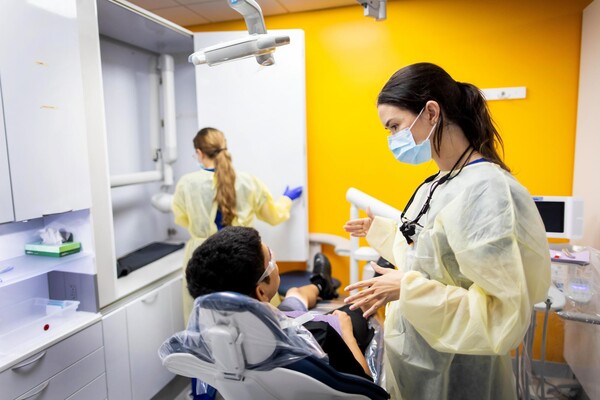
A new role for dental providers? Rethinking where vaccines are given
Vaccinations have traditionally been administered in primary care settings or pharmacies. However, for about a decade, some states have authorized dentists to administer vaccines, and many others did so during the COVID-19 pandemic. The effectiveness of this approach has led some countries and states to expand or consider expanding the role of dental providers in delivering routine vaccines, including those against COVID-19 and the human papillomavirus (HPV), and in providing vaccine education.
Penn student develops a way for computer chips to run more efficiently
Fluid Silicon, a platform from President’s Sustainability Prize winner Nhlanhla Mavuso, allows computer chips to continuously monitor their health and self-tune as their characteristics change. The technology has the potential to reduce energy usage in data centers and improve reliability in mission-critical applications.