Penn sends largest ever delegation to UN climate conference
At COP 25, representatives from the Kleinman Center for Energy Policy, Perry World House, Penn IUR, and elsewhere discuss global climate challenges.
At COP 25, the United Nations climate conference that runs from Dec. 2 through Dec. 13, 2019, Penn sent its largest delegation ever, including philosophy professor Michael Weisberg (center, in blue). He and others from around the University participated in the inaugural Resilience Lab and led discussions on topics like adaptation and climate-resilient urban infrastructure. (Image: Jocelyn Perry)
Having this status gave Penn the opportunity to nominate and support faculty, staff, and students to attend COP on official credentials, Colijn says. “It meant the University was able to join the governments, international organizations and nonprofits, businesses, and members of civil society who are working on a range of climate change issues today.”
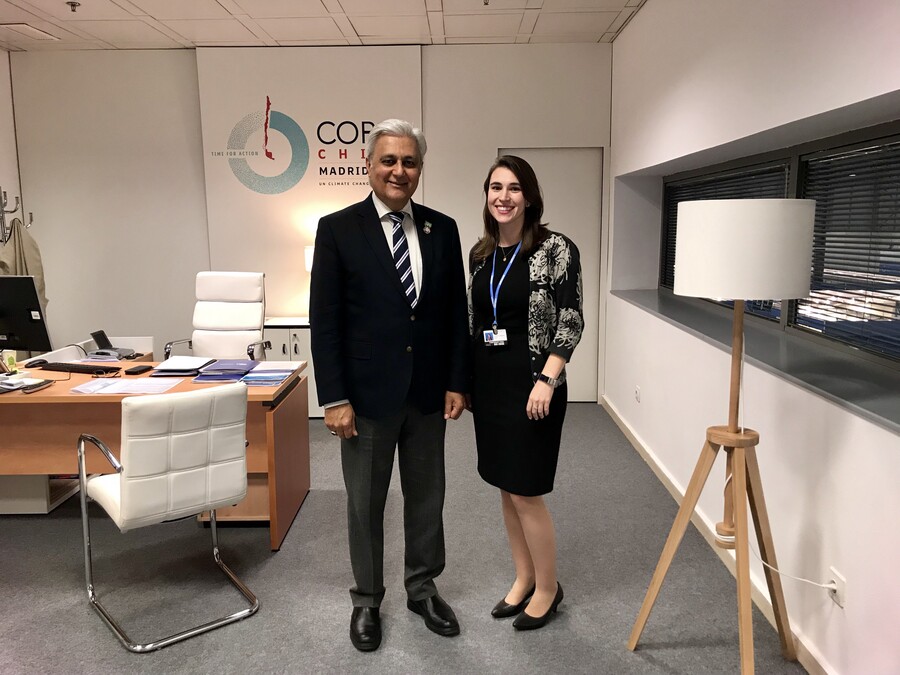
Ovais Sarmad, deputy executive secretary of the United Nations Framework Convention on Climate Change, and Jocelyn Perry, global shifts program manager for Penn’s Perry World House. (Image: Courtesy of Jocelyn Perry)
“This is all part of Penn building a collaborative relationship with UN Climate Change and the affiliate organizations and their policymakers,” adds Jocelyn Perry, the global shifts program manager for Perry World House.
COP stands for Conference of the Parties, and specifically it means member states who signed onto the UN Framework Convention on Climate Change (UNFCCC) created in 1992. The Paris Agreement came out of COP 21 in 2015. At the meeting happening now, treaty signatories are negotiating the rules of the Paris accord, such as how countries will track progress and what financing mechanisms will be put in place. COP 25 is the final gathering before 2020, the point at which many participating nations must submit new climate plans to UNFCCC.
Beyond the member countries, observer-status participants like Penn join UN staff and other organizations to hold conversations around pertinent climate-related issues. “Everyone who works on these at the international policy level will be at this conference,” says Michael Weisberg, a Penn philosophy professor and the inaugural PWH faculty fellow, who has several roles at this year’s gathering.
Last Friday, he facilitated portions of an UNFCCC forum centered on oceans. His section focused on technology and innovation, funding, and education related to resilience and adaptation around sea-level rise.
“In many parts of the world, not only are they going to be the hardest hit from climate change and will have to do the most about resilience planning, but they also struggle with capacity and access to information,” he says. “In Philadelphia, we worry that sea-level rise will mean moving the airport. But in some places, it will mean moving whole towns.”
Weisberg, Perry, and several other Penn representatives also participated in the Resilience Lab. “This is a forward-looking UNFCCC initiative addressing future sustainability concerns,” Perry says. “It asks, What do we want to achieve by 2030, and how do we get there? It’s focused on eight pathways for engagement, including equitable and just use of resources and building on indigenous expertise.”
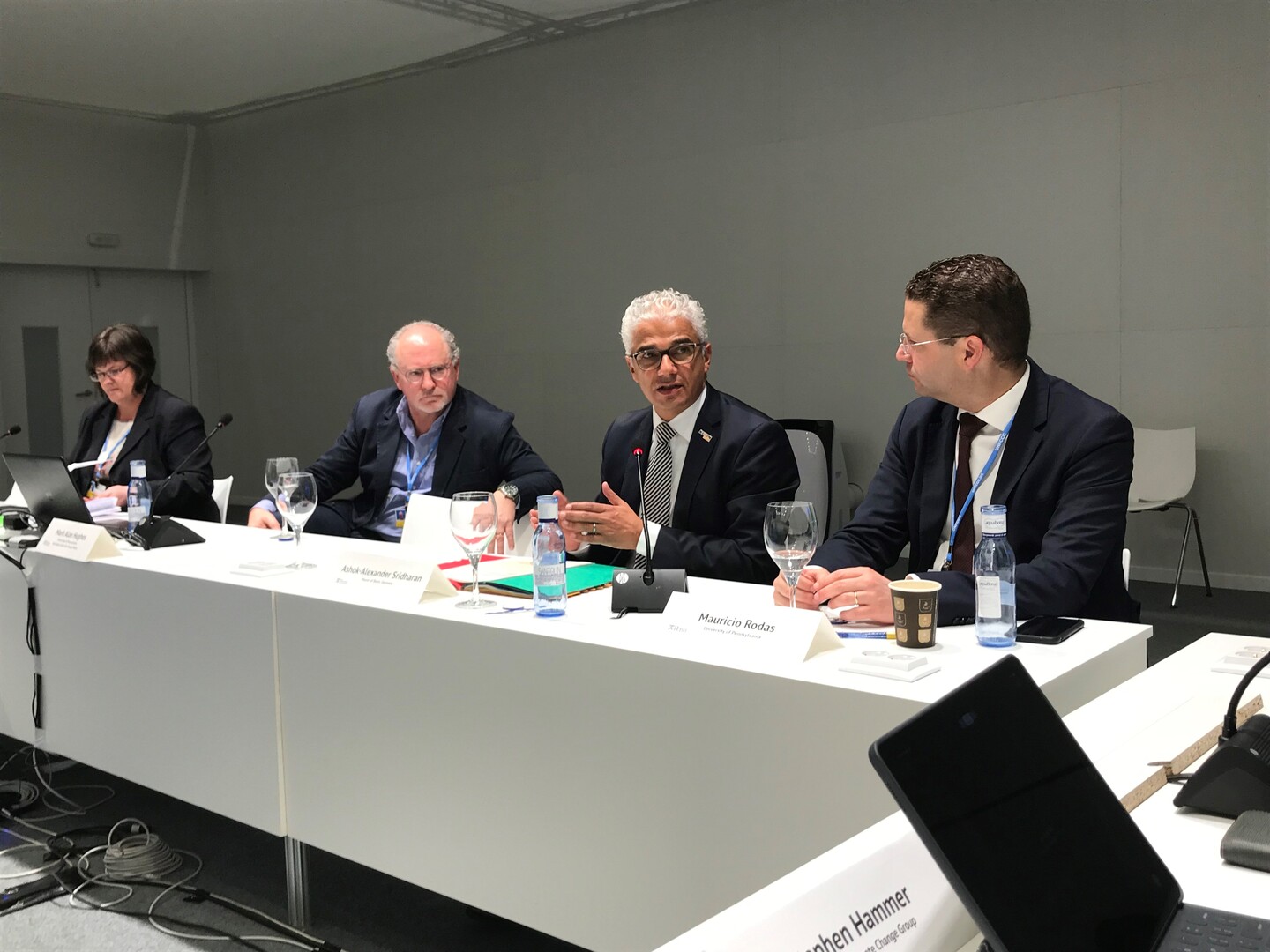
Mark Alan Hughes (second from left), founding faculty director of Penn’s Kleinman Center for Energy Policy, engaged in conversation with Maryke van Staden, manager of the Low Carbon Cities Program, Ashok-Alexander Sridharan, mayor of Bonn, Germany, and Mauricio Rodas, former mayor of Quito, Ecuador. At COP 25, Penn also launched the City Climate-Resilient Infrastructure Financing Initiative (C2IFI), an effort to help connect cities to new financing mechanisms. (Image: Jocelyn Perry)
Her panel—which also included William Burke-White of Penn Law, Dina Ionesco of the UN Migration Agency, and Shyla Raghav, vice president of climate change for Conservation International—covered climate displacement. The World Bank estimates that by 2050, the effects of climate change may displace more than 140 million people within their own countries; projections of climate-induced international displacement vary widely but could be immense.
The Penn-led session touched on some challenging topics. “With climate change and increasing climate-induced migration, especially forced displacement, how do we make that fair, equitable, and just for everyone affected? How do we build the legal structures at the highest levels of international and climate law and make them speak to one another?” Perry says. “How do you foresee conflicts over resources, as water or food become scarcer, and how do you proactively build the structures you need before the crisis hits rather than after?”
Penn also hosted a moderated discussion on climate-resilient urban infrastructure with the UNFCCC’s Nairobi Work Program and other partners, and the Kleinman Center’s Mark Alan Hughes introduced former Quito mayor Mauricio Rodas, a Penn alum and current visiting fellow with PWH and Penn IUR, for a talk he gave on climate financing for cities.
This year, four Penn schools sent delegates, and Colijn says she’s certain that in climate conferences to follow, the number interested will grow. “It really shows just how interdisciplinary climate change is,” she says, “and the diversity of researchers and backgrounds needed to find solutions.”
On the move: Water quality and antimicrobial resistance testing goes mobile
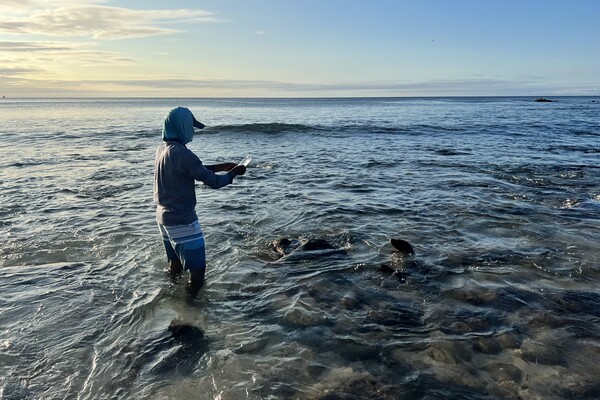
Penn researchers have developed a mobile field laboratory allowing them to test water quality and track antimicrobial resistance in and around San Cristóbal in the Galápagos.
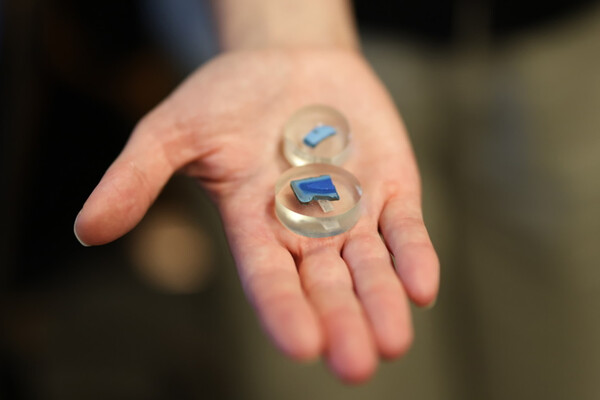
Penn researchers Vanessa and Alexis North are studying one of the largest collections of Egyptian blue objects ever found in the ancient Near East, shedding new light on how the world’s first synthetic pigment may have traveled far beyond Egypt.
A new role for dental providers? Rethinking where vaccines are given
Vaccinations have traditionally been administered in primary care settings or pharmacies. However, for about a decade, some states have authorized dentists to administer vaccines, and many others did so during the COVID-19 pandemic. The effectiveness of this approach has led some countries and states to expand or consider expanding the role of dental providers in delivering routine vaccines, including those against COVID-19 and the human papillomavirus (HPV), and in providing vaccine education.
Penn student develops a way for computer chips to run more efficiently
Fluid Silicon, a platform from President’s Sustainability Prize winner Nhlanhla Mavuso, allows computer chips to continuously monitor their health and self-tune as their characteristics change. The technology has the potential to reduce energy usage in data centers and improve reliability in mission-critical applications.