Training physician-scholars to see patients as people, not categories
The anthropology M.D.-Ph.D. program, recently graduating its first two students, combines clinical and ethnographic skills aimed at working with and caring for society’s marginalized.
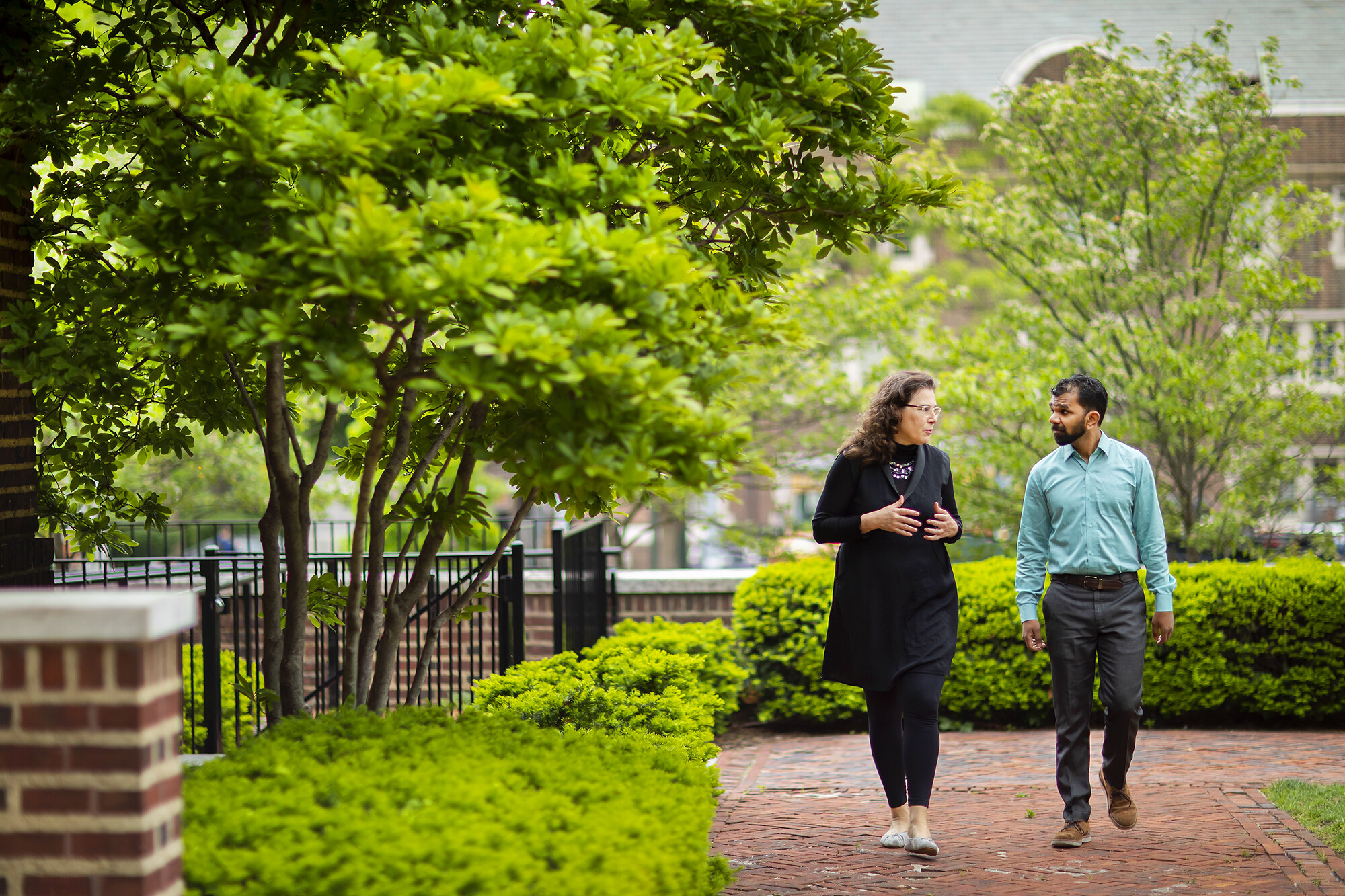
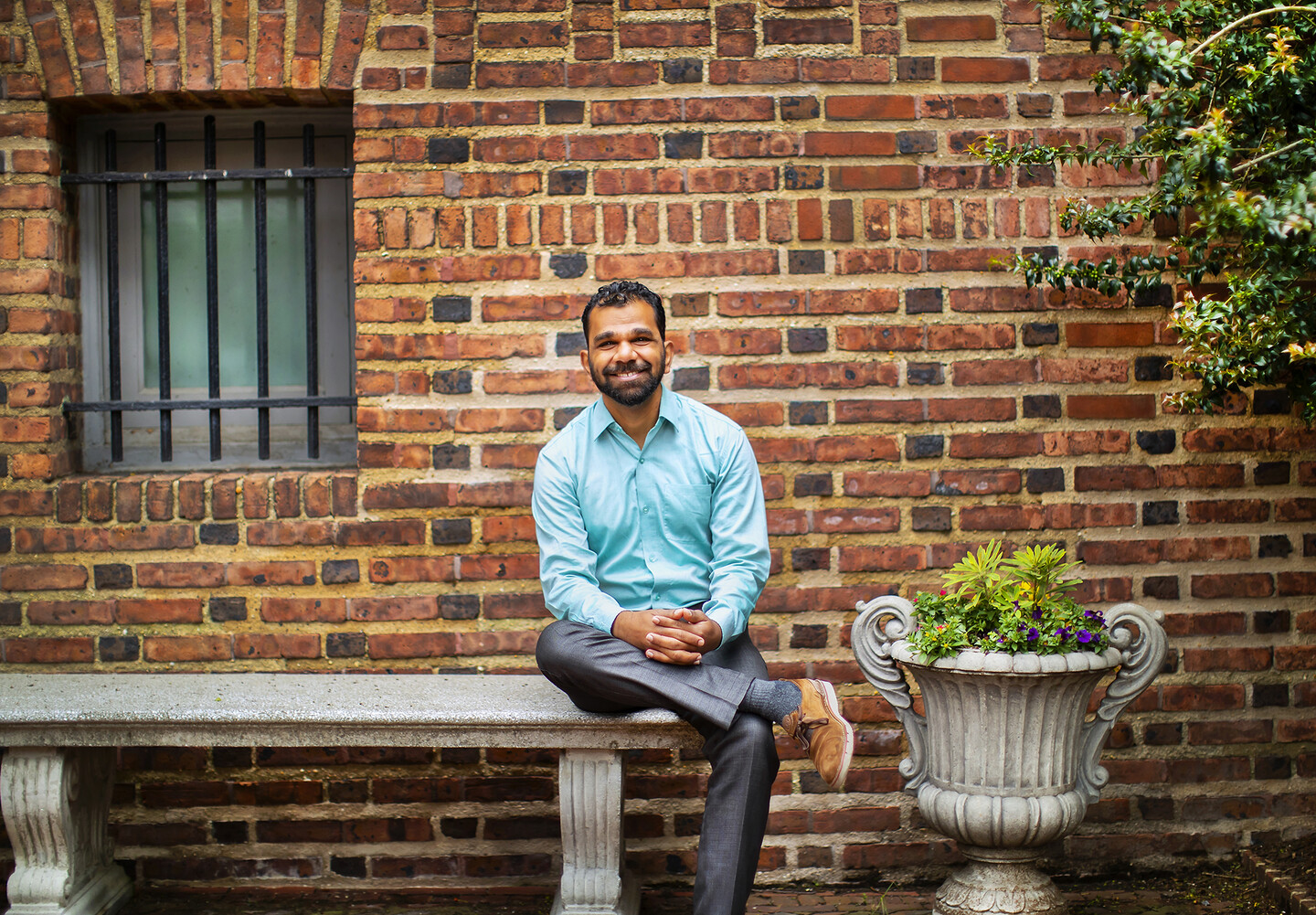
The anthropology M.D.-Ph.D. program, run by Adriana Petryna (left) of the Anthropology Department, in concert with Lawrence Brass of the Perelman School of Medicine, combines clinical and ethnographic training with an eye toward preparing students like Utpal Sandesara (right) to tackle health inequalities. Sandesara, who will graduate this month, is one of nine students in the 10-year-old program.
When Penn graduate student Utpal Sandesara began thinking about a career trajectory more than a decade ago, he admittedly wanted to stray from the physician path so many in his family had taken. But as he immersed himself in the social science classes he loved, he started to miss the biological and physical sciences that had played such a prominent role in high school.
His freshman year at Harvard, the worlds collided in a class taught by well-known physician-anthropologist Paul Farmer and public health scholar Arachu Castro. “They never offered it before, and they never offered it again,” Sandesara explains. “I just happened to luck into it.” That 2004 seminar illuminated the idea that there could be a way for Sandesara to combine his passions.
For his Ph.D., Sandesara focused on an illegal practice in India called sex-selection abortion, in which families determine based on gender of the fetus whether to continue a pregnancy. Because Sandesara was training as a clinician, the physicians and other health care providers he met in India were willing to talk to him. As an ethnographer, he gradually earned the trust of the families choosing to end their pregnancies.
He found it in the University of Pennsylvania’s M.D.-Ph.D. program in anthropology. At the end of May, he’ll graduate with a medical degree from the Perelman School of Medicine and a doctoral degree in anthropology from the School of Arts and Sciences, one of nine students in the 10-year-old program and just the second to finish so far. Nick Iacobelli, who started at the same time as Sandesara, was the first.
“The idea is to train physician-scholars who are able to think deeply about the culture of medicine and the experience of patients. This means working to enhance well-being for the diversity of our communities, rather than relying on harmful cultural stereotypes,” says Penn medical anthropologist Adriana Petryna, who directs the Ph.D. portion of the program.
Current students are studying a range of subjects, including health innovation and care for transgender youth, mental health in an indigenous community, and the health-related experiences of refugees and asylum seekers in the United States. They’re conducting work close to home, in Philadelphia and Atlantic City, and across the globe, in Burkina Faso and Chile.
For his Ph.D., Sandesara focused on an illegal practice in India called sex-selection abortion, in which, based on gender of the fetus, families decide whether to continue a pregnancy at the three-month mark. In the region where he did fieldwork, boys tend to hold higher value than girls because they not only carry on the family name but remain in the family home even after they marry, offering a level of economic security to their aging parents. As a result, the population is starting to skew male.
Because Sandesara was training as a clinician, the physicians and other health care providers he met in India—even those working at a clinic he describes as a “major player” in the black-market offering of the procedure—were willing to talk to him. As an ethnographer, he was able to gradually earn the trust of the families choosing to end their pregnancies.
“There’s been a ton written about this—a lot of really illuminating scholarship about sex-selection abortion—but what we lacked was anything that gets at the practice from the inside. That’s what I think being a dual trainee allowed me to do,” he says. “It opens up a different way of understanding the phenomenon.”
“The idea is to train physician scholars who are able to think deeply about the culture of medicine and the experience of patients. This means working to enhance well-being for the diversity of our communities, rather than relying on harmful cultural stereotypes.”
Adriana Petryna, director, anthropology M.D.-Ph.D. program
When hopeful students like Sandesara reach out to Penn wanting to do the dual degree with a Ph.D. outside of traditional fields like biochemistry and molecular biology, Lawrence Brass tries to understand what such a progression could look like. Brass has run Penn’s Medical Scientist Training Program for more than two decades, and when Sandesara and Iacobelli applied, seeking doctorates in anthropology, Brass reached out to Petryna and several others in her department.
“The requirements of being an M.D.-Ph.D. are a little different than those required to complete a Ph.D. in the social sciences” on its own, Brass says. “We worked out ways to attract students and a logical approach to fitting the coursework into a reasonable timeframe. And I think it’s important that we did. We’re doing something special here.”
Beyond giving program participants a means to explore health inequalities today, a core part of the anthropology M.D.-Ph.D. program training entails learning to teach these issues to physicians and medical students. That was on display when Sandesara and others helped redesign a course for first-year medical students called Doctoring 1A, Introduction to Social Medicine.
“This course looks at how social, cultural, and structural or institutional processes impact doctor-patient relationships,” says Horace Delisser, Penn Medicine’s associate dean for professionalism and humanism. Prior to 2013, he says, the course focused mostly on cultural competency, trying to understand, for instance, the various behaviors and shared experiences of groups, then planning care around those broad, generic identifications.
“That was an OK place to start,” Delisser says, “but you need to think beyond just culture and group identities to structural issues, historical events intruding on and influencing the present. Both the provider and the patient bring their own individual stories and experiences.”
In 2012, Sandesara served as a student facilitator. He and many first-year students recognized that the course as it stood could be improved. So, he and six other students became part of a committee tasked with changing it. “There was a real sense that something more dynamic was needed,” Sandesara explains. “We said, ‘If we make the focus not a particular outcome but rather a way of thinking about the social world and how it impacts medicine, what would the course look like?’”
The new iteration of the class has been well-received, Delisser says, and it keeps changing, always with input from anthropology M.D.-Ph.D. trainees. Those viewpoints create a richer environment for students, caregivers, and patients. And their inclusion speaks to what Petryna describes as widening the scope of physician practice to see patients as people rather than categories, something she believes is a core challenge in medical education and an area where Sandesara and others in the program can lead.
“All of them are focused on the most marginalized in our societies. I see this humanistic and anthropological training as particularly important for the 21st century, where issues such as race, citizenship, and belonging are coming to a head,” she says. “This capacity to model respect and care for patients in a clinical encounter is especially important in these times and is at the heart of a thriving democracy.”
Shortly after graduation, Sandesara will begin his medical residency at UCLA. During those three years, he’ll likely have to put his research on hold, but he’ll put into practice many of the ideals Petryna mentioned. When he finishes residency, he plans to return to the research, too, combining clinical and ethnographic work in just the way the Penn M.D.-Ph.D. in anthropology trained him to do.
Horace Delisser is associate dean for professionalism and humanism and an associate professor of medicine in the Perelman School of Medicine at the University of Pennsylvania.
On the move: Water quality and antimicrobial resistance testing goes mobile
Penn researchers have developed a mobile field laboratory allowing them to test water quality and track antimicrobial resistance in and around San Cristóbal in the Galápagos.
Penn researchers Vanessa and Alexis North are studying one of the largest collections of Egyptian blue objects ever found in the ancient Near East, shedding new light on how the world’s first synthetic pigment may have traveled far beyond Egypt.
A new role for dental providers? Rethinking where vaccines are given
Vaccinations have traditionally been administered in primary care settings or pharmacies. However, for about a decade, some states have authorized dentists to administer vaccines, and many others did so during the COVID-19 pandemic. The effectiveness of this approach has led some countries and states to expand or consider expanding the role of dental providers in delivering routine vaccines, including those against COVID-19 and the human papillomavirus (HPV), and in providing vaccine education.
Penn student develops a way for computer chips to run more efficiently
Fluid Silicon, a platform from President’s Sustainability Prize winner Nhlanhla Mavuso, allows computer chips to continuously monitor their health and self-tune as their characteristics change. The technology has the potential to reduce energy usage in data centers and improve reliability in mission-critical applications.