Penn football is hosting a youth camp this summer for all children ages 7-13 from Monday, June 20, through Thursday, June 23. The Penn football coaching staff, led by Head Coach Ray Priore, the reigning Ivy League Coach of the Year, will work with campers on the fundamental techniques of flag football, as well as lead campers in fun activities and competitions throughout each day to promote interest in and understanding of the game.
The Penn football team is the defending champion of the Ivy League. This past season, the Quakers, who finished 7-3, earned their 17th Ivy title. It was their fourth in seven years and their first since 2012. Priore became just the seventh coach in league history to win an Ivy championship in his first season.
Camp hours are 8:30 a.m. to 3:30 p.m. at the historic Franklin Field, 235 S. 33rd St. For online registration, visit www.pennfootballcamp.com; for more information, contact the Penn football office at football@pobox.upenn.edu or 215-573-9229.
On the move: Water quality and antimicrobial resistance testing goes mobile
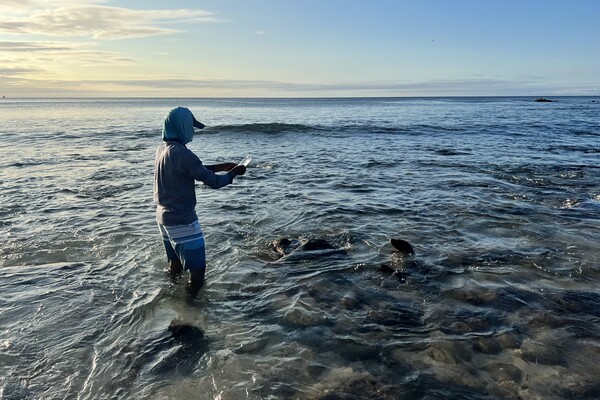
Penn researchers have developed a mobile field laboratory allowing them to test water quality and track antimicrobial resistance in and around San Cristóbal in the Galápagos.
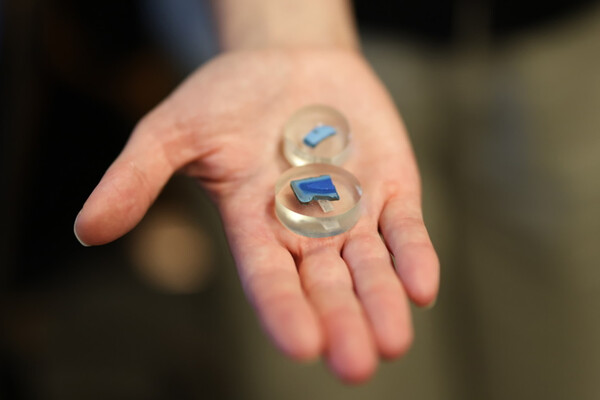
Penn researchers Vanessa and Alexis North are studying one of the largest collections of Egyptian blue objects ever found in the ancient Near East, shedding new light on how the world’s first synthetic pigment may have traveled far beyond Egypt.
A new role for dental providers? Rethinking where vaccines are given
Vaccinations have traditionally been administered in primary care settings or pharmacies. However, for about a decade, some states have authorized dentists to administer vaccines, and many others did so during the COVID-19 pandemic. The effectiveness of this approach has led some countries and states to expand or consider expanding the role of dental providers in delivering routine vaccines, including those against COVID-19 and the human papillomavirus (HPV), and in providing vaccine education.
Penn student develops a way for computer chips to run more efficiently
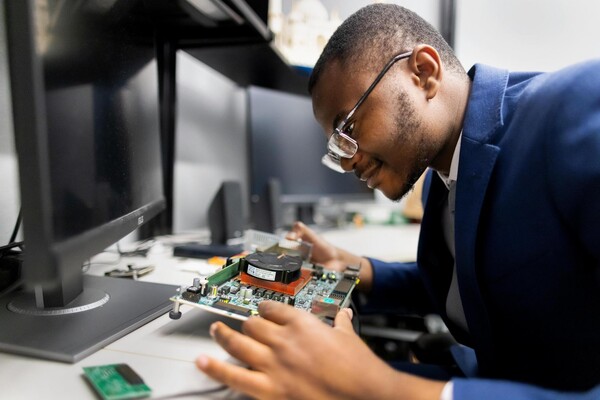
Fluid Silicon, a platform from President’s Sustainability Prize winner Nhlanhla Mavuso, allows computer chips to continuously monitor their health and self-tune as their characteristics change. The technology has the potential to reduce energy usage in data centers and improve reliability in mission-critical applications.