Penn grad student’s whiskey distillery gets boost in West Philly
Like most Ph.D. students looking for answers to outstanding questions, Zachary Cohen relied on academic papers and an online community of peers. This time, though, he wasn’t researching clinical psychology—his study focus as a fifth-year doctoral candidate at Penn—but, rather, information about whiskey distilling. That exploration led to the creation of Red Brick Craft Distillery, an endeavor Cohen started with a business partner, Brian Forrest.
The six-year-old journey began when Cohen’s friend Jason Rodriguez, then a Penn neuroscience Ph.D. student and now a developer at the Wharton School, taught him the ins and outs of homebrewing. That initial “mix of cooking and science,” plus a gift of homemade gin from an acquaintance, spurred a desire to learn more about distilling, so he turned to academia.
“I downloaded peer-reviewed articles about everything from the different compounds that evaporate, to what happens in brewing, to the different chemical processes that occur and [barrel] aging, which is such a big part of making whiskey,” he says. “What are the flavor compounds, chemical changes; what happens in the barrel?”
Today, Red Brick occupies 900-square-feet in a space on Martha Street at the intersection of Kensington, Port Richmond, and Fishtown. The company sells two whiskeys, two rums, and recently released a barrel-aged distilled birch beer.
Red Brick is making a mark around West Philadelphia as well, with a pair of drinks on the menu at Han Dynasty, plus featured spots at World Cafe Live and Local 44. Most recently, it signed on as the flagship liquor provider for Spread Bagelry at 36th and Chestnut streets.
The company takes pride in its local emphasis.
“We focus on local ingredients; 85 percent of the barley we use is grown and malted in Pennsylvania,” Cohen says. “After we’re done, we take our barley to a local farm, where it’s used as feed for cattle and other uses. We’re very focused on keeping everything as local as possible.”
That could become more challenging as the business grows.
“We’re producing about 20 gallons a week right now of whiskey. We age that in five-gallon barrels because those age in about seven months,” Cohen says. As the distillery continues to expand, he says so will the barrel size used for this process, meaning longer lead-time to an end product.
Cohen and his partners are aiming for success, working hard to gain traction and foot traffic, yet Cohen says he has no plans to leave academic life. When he graduates in May, he hopes to begin an internship, the next step on his path to becoming a professor.
On the move: Water quality and antimicrobial resistance testing goes mobile
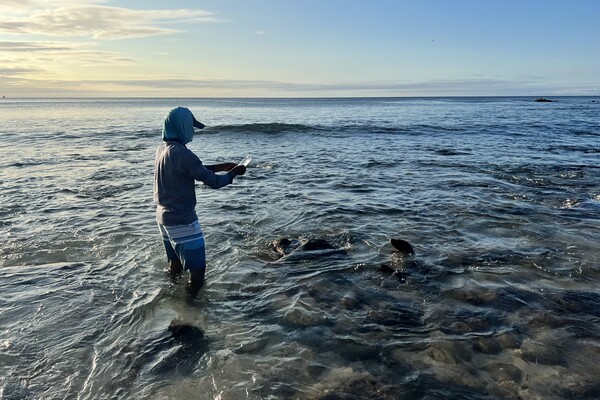
Penn researchers have developed a mobile field laboratory allowing them to test water quality and track antimicrobial resistance in and around San Cristóbal in the Galápagos.
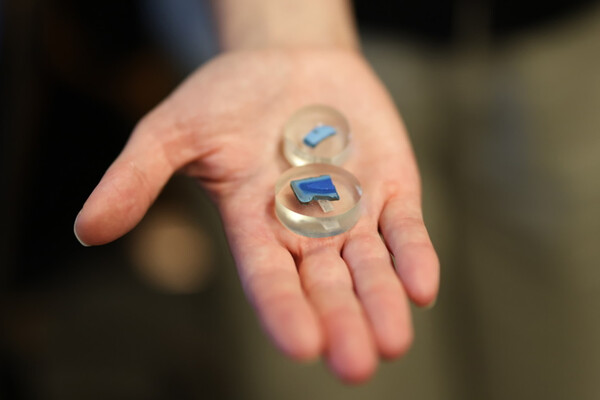
Penn researchers Vanessa and Alexis North are studying one of the largest collections of Egyptian blue objects ever found in the ancient Near East, shedding new light on how the world’s first synthetic pigment may have traveled far beyond Egypt.
A new role for dental providers? Rethinking where vaccines are given
Vaccinations have traditionally been administered in primary care settings or pharmacies. However, for about a decade, some states have authorized dentists to administer vaccines, and many others did so during the COVID-19 pandemic. The effectiveness of this approach has led some countries and states to expand or consider expanding the role of dental providers in delivering routine vaccines, including those against COVID-19 and the human papillomavirus (HPV), and in providing vaccine education.
Penn student develops a way for computer chips to run more efficiently
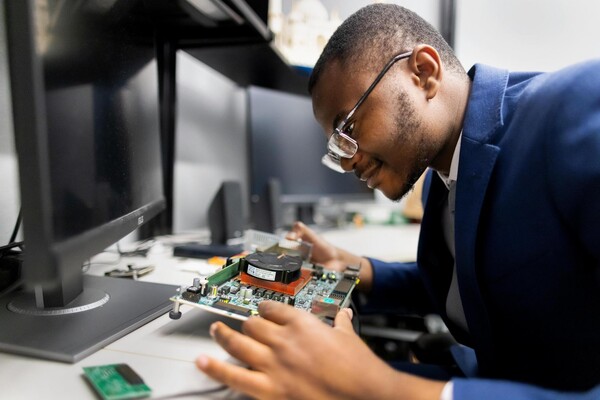
Fluid Silicon, a platform from President’s Sustainability Prize winner Nhlanhla Mavuso, allows computer chips to continuously monitor their health and self-tune as their characteristics change. The technology has the potential to reduce energy usage in data centers and improve reliability in mission-critical applications.