‘Ageing’ phenomenon causes powerful earthquakes, report Penn researchers
Scientists have gotten better at predicting where earthquakes will occur, but they are still in the dark about when earthquakes will strike and how devastating they will be.
In the search for clues, scientists at Penn are studying a phenomenon called “ageing.” In ageing, the longer materials are in contact with each other, the more force is required to move them. This resistance is called static friction. The longer an object, such as a fault, is sitting still, the more static friction builds up and the stronger the fault gets.
Even when the fault remains still, tectonic motion is still occurring. Stress builds up in the fault as the plates shift, until finally they move so much that they exceed the static friction force and begin to slide. Because the fault grew stronger with time, the stress can build up to large levels, and a colossal amount of energy is released in the form of a powerful earthquake.
“This ageing mechanism is critical in underlying the unstable behavior of faults that lead to earthquakes,” says Robert Carpick, the John Henry Towne Professor and chair of the Department of Mechanical Engineering and Applied Mechanics in the School of Engineering and Applied Science. “If you didn’t have ageing, then the fault would move very easily, so you’d get much smaller earthquakes happening more frequently, or maybe even just smooth motion. Ageing leads to the occurrence of infrequent, large earthquakes that can be devastating.”
Scientists have been studying the movement of faults and ageing in geological materials at the macroscale for decades, producing phenomenological theories and models to describe their experimental results. But there’s a problem when it comes to these models.
A Penn-based project seeks to understand the friction of rocks from a more physical point of view at the nanoscale.
In their most recent paper, the researchers, led by Carpick and Tian, verified the first fundamental theory to describe ageing and explain what happens when load increases.
In addition to providing a better understanding of earthquakes, this work could lead to more efficient nano-devices. Due to the fact that many micro- and nano-devices are made from silicon, understanding friction is key to getting those devices to function more smoothly.
But, most importantly, the researchers hope that somewhere down the line, a better understanding of ageing will enable them to predict when earthquakes will occur.
“Earthquake locations can be predicted fairly well,” Carpick says, “but when an earthquake is going to happen is very difficult to predict, and this is largely because there’s a lack of physical understanding of the frictional mechanisms behind the earthquakes. We have a long way to go to connect this work to earthquakes. However, this work gives us more fundamental insights into the mechanism behind this ageing. In the long term, we think these kinds of insights could help us predict earthquakes and other frictional phenomena better.”
On the move: Water quality and antimicrobial resistance testing goes mobile
Penn researchers have developed a mobile field laboratory allowing them to test water quality and track antimicrobial resistance in and around San Cristóbal in the Galápagos.
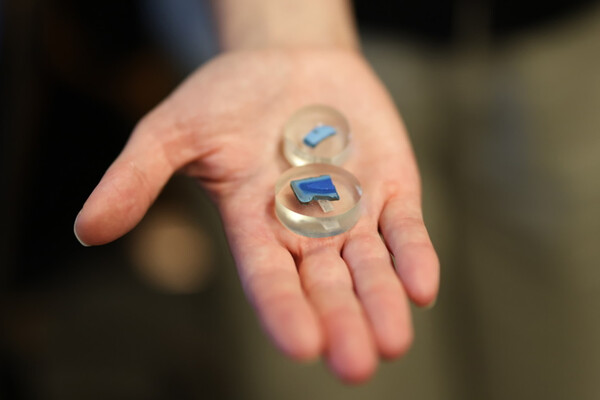
Penn researchers Vanessa and Alexis North are studying one of the largest collections of Egyptian blue objects ever found in the ancient Near East, shedding new light on how the world’s first synthetic pigment may have traveled far beyond Egypt.
A new role for dental providers? Rethinking where vaccines are given
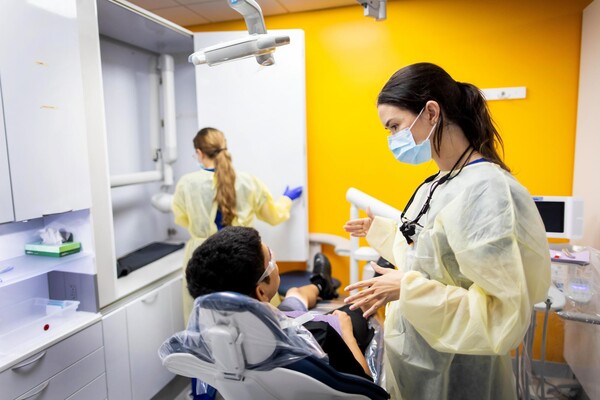
Vaccinations have traditionally been administered in primary care settings or pharmacies. However, for about a decade, some states have authorized dentists to administer vaccines, and many others did so during the COVID-19 pandemic. The effectiveness of this approach has led some countries and states to expand or consider expanding the role of dental providers in delivering routine vaccines, including those against COVID-19 and the human papillomavirus (HPV), and in providing vaccine education.
Penn student develops a way for computer chips to run more efficiently
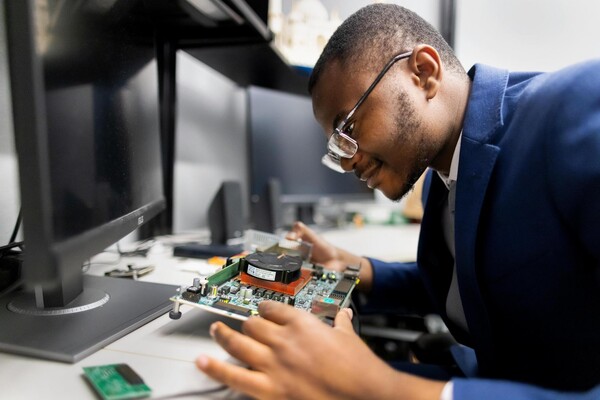
Fluid Silicon, a platform from President’s Sustainability Prize winner Nhlanhla Mavuso, allows computer chips to continuously monitor their health and self-tune as their characteristics change. The technology has the potential to reduce energy usage in data centers and improve reliability in mission-critical applications.